Prevention and Treatment Methods for Three Common Diseases of River Crabs During the Summer Peak Growth Season
In summer, river crabs grow vigorously and enter their peak feeding period. The increase in feeding amount leads to deteriorating water quality, and various harmful organisms and parasites seize the opportunity to multiply in large numbers, making river crabs less resistant and susceptible to crab diseases. Therefore, in summer it is necessary to prevent and treat ciliate disease, incomplete molting, and edema disease in river crabs.
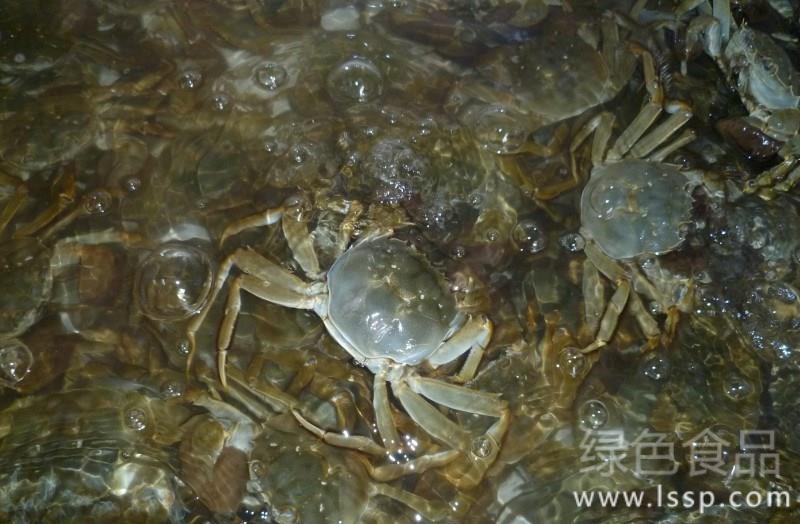
River crab
Ciliate disease:Caused by parasites such as Epistylis, Vorticella, and Carchesium. Brownish-yellow or light green flocculent matter grows on the body surface, appendages, and gills of river crabs. They move slowly, refuse to eat, have difficulty molting, and die. Crab ponds with excessively high organic matter content and no aquatic plants or climbing substrates are prone to ciliate disease. Prevention and treatment methods: (1) Pay attention to quarantine when purchasing river crab seed stock; only stock after disinfection of the seed crabs. Improve pond conditions, remove silt, plant aquatic plants, and regulate water quality. (2) Splash formalin or benzalkonium bromide evenly over the entire diseased crab pond, at dosages of 40 g-50 g and 20 g-30 g per cubic meter of water respectively. (3) Splash 2 g-3 g of zinc sulfate, or 8 g-10 g of chlortetracycline, per cubic meter of water over the entire pond.
Incomplete molting:Parasitism by Spirogyra and ciliates, water pollution, lack of good hiding and climbing substrates, malnutrition, and emaciation of the crab body can all cause incomplete molting in river crabs. In diseased and dead crabs, the carapace shell lifts up or a crack appears at the junction between the posterior edge and the abdomen. Prevention and treatment methods: (1) Optimize the crab pond environment, remove silt, and plant aquatic plants to maintain good water quality. One week before mass molting of river crabs, splash quicklime over the entire pond at a ratio of 15 g-20 g per cubic meter to regulate water quality. (2) Feed palatable, nutritionally complete feed, such as fresh small trash fish and Corbicula clam meat, to ensure successful first molting of river crabs. (3) Continuously feed for 5-7 days a diet supplemented with 2%-3% molting hormone and multivitamins.
Edema disease:Mostly caused by infection with bacteria and Mucor. Edema in river crabs caused by bacteria presents with edema of the hindgut and gills successively, swelling of the thoracoabdominal region, and a transparent appearance,inability to crawl, and no change in shell color. Edema caused by Mucor is purely a gill infection; the abdomen does not swell but instead sinks inward due to emaciation, and the area below the thoracic carapace at the junction with the abdomen swells but is not transparent. In diseased river crabs, the thoracic carapace in the gill region is grayish-white, they move slowly, and they die on the bank. Prevention and treatment of bacterial edema: (1) Change water 2 times consecutively, draining first and then filling, with each water change at 33%-50%. (2) Splash 1 g-2 g of bleaching powder, or 1 g of oxytetracycline powder, or 15 g-20 g of quicklime per cubic meter of water over the entire pond. (3) Feed each kilogram of river crab 0.25 g of oxytetracycline and 0.01 g of furazolidone, plus 0.5%-1% garlic mixed into the bait, continuously for 5-7 days. Prevention and treatment methods for edema caused by Mucor: (1) Change water 2 times consecutively. (2) Splash 2 g of bleaching powder, or 10 mL of formalin, or 20 g-25 g of quicklime per cubic meter of water over the entire pond.