Young rabbits have a high mortality rate when they fall ill in summer; how can they safely get through the summer?
Summer's high temperatures and heavy humidity breed all kinds of bacteria and parasites, and rabbits are prone to heatstroke, poisoning and various gastrointestinal infections, with young rabbits under the greatest threat and a fairly high mortality rate. Therefore, management must be strengthened to ensure young rabbits get through the summer safely.
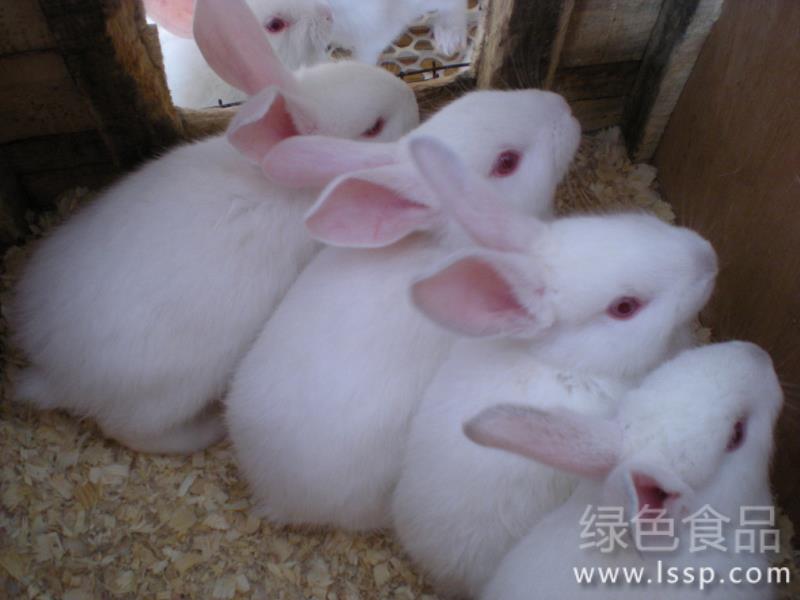
Young rabbits
Heat dissipation and temperature control.To prevent direct sunlight, vines such as melons, beans, grapes and pumpkins can be planted around the rabbit hutch, or a layer of lime slurry can be applied to the inside and outside walls of the hutch; for open-air hutches, set up a shade awning and open the doors and windows to let air circulate; do not crowd the rabbit cages; if the room temperature exceeds 30°C, sprinkle cool water every 2 to 3 hours, or take a new brick, soak it in cool water until it has absorbed enough water (no more bubbles rise), then place it in the rabbit cage to dissipate heat and lower the temperature.
Clever feed adjustment.In summer, feed more green, juicy forage and appropriately increase protein-rich concentrates, while feeding as little high-energy feed as possible; to prevent young rabbits from scouring, feed some high-quality dried green grass and provide plenty of clean, cool water (best with 1%-2% salt added to replenish salts), letting them eat and drink freely. As for feeding method, because summer is hot, young rabbits mostly lie still during the day and eat and move about at night, so the principle of “early breakfast, light and small lunch, filling dinner, plenty of grass at night” should be followed to increase the young rabbits' feed intake and promote growth and development.
Careful feeding of young rabbits.Young rabbits are hard to raise in summer, so newborn young rabbits should be allowed to take colostrum as early as possible. The number of young rabbits per litter should be adjusted in good time, generally 6-8 per litter is suitable. After young rabbits start eating, promptly give them 0.5% licorice water by dropper; to every 100 ml of licorice water add 10 g of brown sugar, 10 g of glucose, 0.5 g of compound diaveridine and 0.5 g of furazolidone, feeding twice a day, 5 ml per rabbit. Pay attention to cooling and mosquito prevention, prevent harm to young rabbits from predators such as dogs and cats, and keep the bedding clean and dry.
“Five cleans” and no disease.Clean grass: green forage must be clean; pick out foreign matter such as string and plastic film, wash and drain it, and let it dry before feeding. When cutting green grass to feed rabbits, do not use any plant that is unrecognized or suspected of being toxic. Grass with mud, grass that is rotten or spoiled, grass wet with rain or dew, and grass sprayed with pesticide must never be fed. Clean feed: store summer feed properly, and the concentrate for young rabbits must contain no sand or stones, must not be moldy and must be free of contamination. Clean hutch: the rabbit hutch should be shady, keep it ventilated, with fresh air, dry and clean. Screen windows should be fitted in the hutch, and mosquito- and fly-killing drugs sprayed regularly. Manure should be cleared every day and piled up to ferment, and once a week the hutch should be disinfected by air spray together with the rabbits; the disinfectant should be a broad-spectrum, highly effective, low-toxicity drug such as Baidusha. Clean trough: the feed trough should be kept clean, residual forage removed promptly, and wet mash should be mixed and fed fresh each time, to prevent rabbits from getting sick by eating moldy feed left in the trough. Clean water: drinking water should be clean and fresh, the water basin should be scrubbed every day, and if the water is found to be contaminated by rabbit droppings or feed, it should be replaced immediately. In hot weather, 1%-2% salt can also be added to the water, which both replenishes the salt lost by young rabbits and helps lower temperature and prevent heatstroke.
Strictly prevent epidemic diseases.Summer's high temperatures and heavy humidity make young rabbits prone to infectious diseases and coccidiosis. Chopped plantain, dandelion, scallion and garlic can be added to the feed, and each rabbit can be given 2 tablets each of diaveridine and chlorobenzoguanide orally every day for two weeks, then stopped for one week, with the therapeutic dose doubled. Mixing pediatric cold medicine, oxytetracycline powder and Rendan into the feed for young rabbits, and often feeding mung bean soup, Huoxiang water and the like, can prevent heatstroke in rabbits.