In summer, raising fish starts with water: the water quality of fish ponds is changeable and must not be ignored
In summer, fish grow quickly, feed input increases, water temperature rises, and fish metabolism intensifies, so the water quality of fish ponds changes greatly in summer, and fish are prone to disease. Therefore, whether the water quality is good or poor is the key to the success or failure of raising fish in summer.
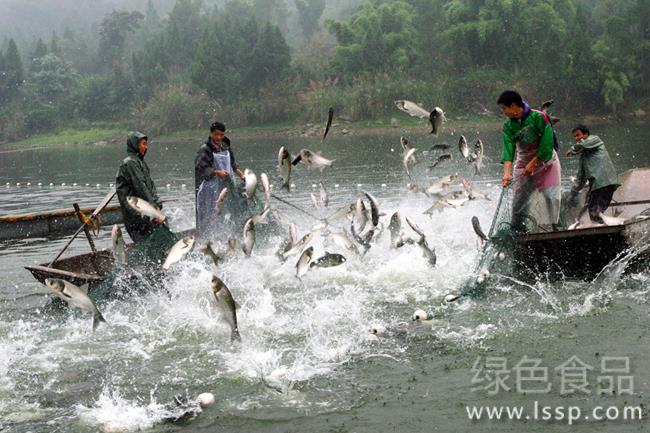
Fish
Medicinal improvement.First, use quicklime. Applying fresh lump quicklime irregularly to regulate water quality can not only adjust the pH of the water body and reduce toxic gases, but also inhibit the reproduction of pathogens and prevent fish diseases. The dosage of quicklime is 15-20 kg per mu when the water depth is 1 m; after slaking into slurry, splash it evenly over the whole pond, generally once every 20-30 days. Second, use photosynthetic bacteria products. The use of photosynthetic bacteria can make the water quality fertile, lively, tender, and refreshing, reduce and alleviate fish gasping at the surface and pond turnover, prevent bacterial fish diseases, and improve the fish's feeding and digestion ability and enhance immune function. Use once every 20 days, splashing evenly over the whole pond during use.
Turn on the aerator.On clear days, turn it on from 2-3 p.m. to regulate water quality, so as to promote water convection, increase dissolved oxygen in the pond water, and release toxic gases; during continuous high-temperature rainy days, turn on the aerator in the middle of the night, and do not turn it on in the evening; when the weather is muggy, the time for turning on the aerator can be appropriately extended, and shortened at noon; when the weather is cool, shorten the time it is turned on, and if fish gasp at the surface in the middle of the night, extend the time it is turned on.
Add new water.The addition of new water increases dissolved oxygen and nutrient salts in the water body, dilutes organic matter and toxic substances, and restores the balance of pond water composition. Generally, add or change water once every 10-15 days, with each addition of new water accounting for 1/3 of the total pond water; if the pond water has seriously deteriorated, drain 1/3 first and then add new water. Water should be added before 2-3 p.m. on clear days; adding water in the evening is prohibited, so as to avoid causing premature convection between the upper and lower layers and fish gasping at the surface due to lack of oxygen.
Stir the pond bottom.Operation methods: 1. A person goes into the pond and uses a long-handled rake or directly uses their feet to stir the pond bottom. 2. Drag a rope on the bank to turn it over. 3. Polyculture bottom-dwelling fish. Stir or turn the pond bottom once every 1-2 weeks, when the weather is clear and windy, to avoid pond turnover.
Control bait and fertilizer.In summer, fish grow quickly, so feeding must be strengthened so that the fish eat their fill and eat well. The suitable feeding amount is for the fish to eat their fill within 2 hours. Do not let the bait be excessive, otherwise it not only wastes bait but also pollutes the water body. In addition, according to whether the pond water is rich or lean, apply chemical fertilizers, green manure, and manure and other fertilizers in small amounts many times; generally every 10 days apply 200 kg of human and livestock manure or urine, or 300 kg of green manure, or 2 kg of urea per mu; chemical fertilizers should be applied in a nitrogen-to-phosphorus ratio of 1:2, and good water quality can be maintained.