What methods can improve the fertilizer efficiency of urea topdressing?
What methods can improve the effect of urea topdressing? Please explain. The following methods can be used for urea topdressing: 1. Determine the topdressing amount according to soil fertility. Practice has proved that increasing the fertilizer amount on medium- and low-yield fields can significantly increase yield. For high-yield fields, maintaining a general fertilization level is sufficient...
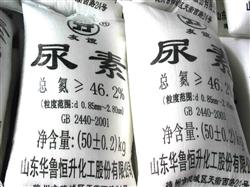
What methods can improve the effect of urea topdressing? Please explain.
The following methods can be used for urea topdressing:
1. Determine the topdressing amount according to soil fertility. Practice has proved that increasing the fertilizer amount on medium- and low-yield fields can significantly increase yield. For high-yield fields, maintaining a general fertilization level is sufficient. Generally, on the basis of applying sufficient farmyard manure and chemical fertilizer as base fertilizer, taking the two major crops corn and sorghum as examples, on high-fertility soil, apply 20 kg per mu as topdressing; on medium-fertility soil, apply 23 kg per mu; on low-yield soil, apply 27 kg as topdressing.
2. Apply topdressing during the peak nutrient period of the crop. The main role of topdressing is to use fertilizer to regulate the growth and appearance of the crop, meet the crop's nutrient needs in the middle and late growth stages, and achieve the goal of increasing yield. The key to improving the utilization rate of topdressed chemical fertilizer is to master the critical period and the maximum efficiency period of nutrient uptake for various crops, and try to apply topdressing during the crop's peak nutrient period so as to improve fertilizer utilization. Corn should be topdressed with urea from the jointing stage to the large trumpet stage; sorghum from the jointing stage to the booting stage; rice from the greening stage to the tillering stage; sunflower at the bud stage; wheat at the three-leaf stage; soybean at the early flowering stage.
3. Apply deeply and cover with soil. Practice has proved that after urea is applied on the soil surface at ordinary temperature for 4-5 days, most of the nitrogen volatilizes after ammonification, and its utilization rate is only about 30%, especially on the surface of calcareous and alkaline soil, where the ammonia volatilization loss is even more serious. Therefore, when using urea to topdress dryland crops, it is best to dig holes or open furrows and apply it deeper than 10 cm, so that the urea is in moist soil, which is conducive to the transformation of urea and also helps ammonia nitrogen fertilizer be adsorbed by the soil, reducing volatilization loss. When using urea to topdress rice, the water layer must not exceed 3-5 cm at most.
4. Keep a certain distance from the crop. Because urea has a high nitrogen content, high nutrient concentration, and strong hygroscopicity. Therefore, when topdressing, prevent applying urea near the crop root system, and especially do not let urea fall into the crop's heart leaves, so as not to burn the seedlings and affect growth. Be sure to keep a certain distance from the crop.
5. Apply earlier than other nitrogen fertilizers. Because urea is a low-molecular organic compound, after being applied to the soil it must undergo an ammonification process and be transformed into ammonium carbonate, which is highly volatile, before it can be absorbed by the crop root system. Therefore, when using urea to topdress crops, it should be applied about 7 days earlier than other nitrogen fertilizers.
6. Never mix with alkaline fertilizers. Urea is a neutral fertilizer. When topdressing, never mix and apply it at the same time with alkaline chemical fertilizers, so as to prevent reducing fertilizer efficiency. If it must be applied mixed with alkaline fertilizers, the fertilization dates should also be staggered, generally 3-5 days apart. However, when urea is mixed and applied with fertilizers such as potassium chloride, phosphate rock powder and superphosphate, its yield-increasing effect is very significant.
7. It is not suitable to irrigate immediately after topdressing. After urea is applied to the soil, it cannot be adsorbed by the soil before it is decomposed and transformed. If irrigation is carried out immediately after topdressing, it will cause a large loss of urea. When the soil is severely short of water and irrigation is absolutely necessary, small amounts of frequent irrigation should also be used, and flood irrigation must be avoided. When topdressing rice, the characteristic that urea is relatively mobile before transformation should be considered, and irrigation should not be carried out immediately after topdressing. Generally, it is suitable to irrigate once with a small amount of water 3-5 days after topdressing.
8. Use as foliar topdressing. Urea causes relatively little damage to crop leaves, is easily soluble in water, has strong diffusibility, is easily absorbed by leaves, and after entering the leaves it is not likely to cause plasmolysis, so it is very suitable for foliar topdressing. However, urea with a biuret content not exceeding 2% should be selected to prevent damage to the leaves. The concentration of urea used for foliar topdressing varies with crop type. The concentration for foliar topdressing of gramineous crops is 1.5%-2%; the concentration for foliar topdressing of dicotyledonous crops is 1%, and during the crop flowering stage the concentration should be even lower. Generally, the amount of urea used for foliar topdressing per mu is 0.5-1.5 kg. It is suitable to spray after 4 p.m., when transpiration is low and leaf stomata gradually open, so that the diluted urea solution can basically be absorbed completely overnight, greatly improving the utilization rate of urea.
Click to get more nitrogen, phosphorus and potassium application techniques
Click to get more chemical fertilizer application techniques