Overbreeding Leads to Gout in Laying Hens: How to Prevent and Treat High-Calcium Gout in Laying Hens
In order to maximize the value of laying hens, many farmers have overbred them, causing the hens to suffer from many diseases such as gout and sudden death. Among these, gout in laying hens has a relatively high incidence rate and a relatively high mortality rate. Today, the editor will introduce the symptoms and prevention and treatment methods of gout in laying hens to farmers.
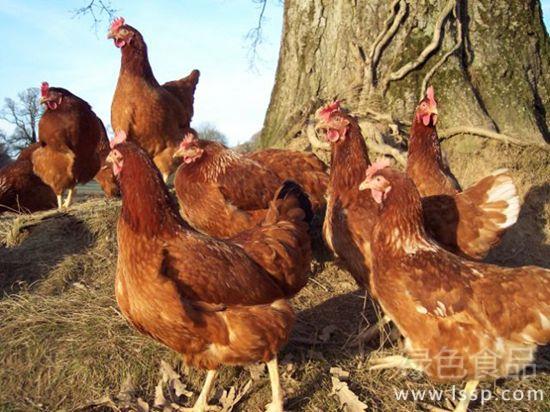
Laying hens
1. Clinical symptoms
Laying hens suffering from high-calcium gout are depressed, with ruffled feathers, prefer lying down, have reduced or no appetite, become emaciated and weak, close their eyes and stare blankly, have empty crops, and diarrhea, with white urate in the chicken droppings. Most affected laying hens have swelling of the metatarsus and toes, which become thickened and deformed, with joint swelling 1 to 1.5 times normal size; the joints feel hard to the touch, and when lightly pinched the chickens dodge and struggle. Hens with mild symptoms stand unsteadily, while those with severe symptoms cannot stand, are paralyzed, and stop eating. Egg production of the laying hens decreases or stops.
2. Differential diagnosis
The chicken house is well ventilated, dry, with fresh air and suitable temperature; the crude protein content in the feed is less than 18%; sodium bicarbonate, sulfonamide drugs and other substances have not been consumed in excess; and no diseases such as nephropathogenic infectious bronchitis have occurred. Based on comprehensive judgment, it is diagnosed as high-calcium gout in laying hens.
3. Prevention and treatment methods
(1) Immediately pick out sick chickens once found, confirm the diagnosis promptly, identify the cause clearly, and then treat;
(2) Once it is clear that gout is caused by high calcium, promptly remove the extra bone meal, stone meal and calcium hydrogen phosphate added to the laying hen feed;
(3) Administer kidney-swelling detoxification medicine in drinking water, at 0.2% in water every day from 8:00 to 10:00 in the morning, that is, 100 grams of kidney-swelling detoxification medicine mixed with 50 kilograms of water, with 3 days as one treatment course, and provide plenty of clean water in the afternoon;
(4) Feed affected chickens more green, juicy feed, and add about 0.01% potassium permanganate and 0.5% edible alkali or 0.5% sodium bicarbonate to the drinking water of laying hens, continue for 3 days, then change to adding 0.2% sodium bicarbonate and drink for another 3 days, to promote the excretion of urate from the laying hens' bodies. (Note: If kidney-swelling detoxification medicine has already been used for the laying hens, then sodium bicarbonate does not need to be added.) Adding an appropriate amount of vitamin A can speed up the recovery of laying hens;
(5) Strengthen scientific feeding management and hygiene and epidemic prevention work for laying hens; the chicken house should have sufficient sunlight and be cleaned frequently;
(6) Formulate reasonable rations according to the different ages of laying hens in days, and pay attention to the balance of the calcium-to-phosphorus ratio in the feed.