Black Silkie chickens offer high returns from both medicinal and nutritional benefits; a detailed guide to artificial breeding techniques
The Black Silkie chicken combines both medicinal and nutritional benefits in one. Medicinal uses: it replenishes deficiency and damage from overexertion, benefits women after childbirth, tonifies the liver and kidneys, and boosts qi and blood; as meat: it is delicious; as an ornamental bird: it is small and exquisite with a beautiful posture, and is much loved. Raising Black Silkie chickens is clearly profitable, so the editor will now introduce the artificial breeding techniques for Black Silkie chickens.
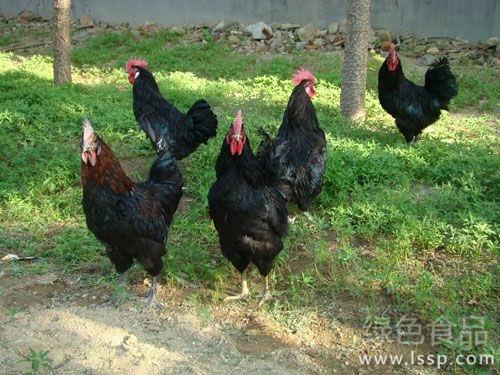
Black Silkie chicken
I. Living habits.The Black Silkie chicken has strong adaptability and is suited to wild conditions. Living habits: 1. Gentle temperament; it can be kept in coops, pens, cages, or free-range grazing; 2. It likes to live in groups, foraging in small groups of three to five; 3. Strong broodiness: the Black Silkie chicken goes broody after laying every 20 eggs, so it must be awakened from brooding at the right time to increase the egg-laying rate; 4. It likes dust bathing and keeps its feathers clean; 5. Strong adaptability; 6. Poor resistance to cold and damp.
II. Breeding.To improve reproductive capacity, the Black Silkie chicken's natural brooding habit must be changed in order to increase egg production; usually each Black Silkie chicken can lay 110~120 eggs per year. The reproductive lifespan of the Black Silkie chicken is 3~4 years. If machine incubation is used, roosters at 6~7 months and hens at 10 months can be mated, with a male-to-female ratio of 1:6. Incubation must pass five checks: the temperature check: 37~38℃; the humidity check: relative humidity 65%~70% in the early stage, 50%~55% in the middle stage, and 65% at hatching; the egg-turning check: turn once every 2 hours, transfer the trays after 18 days and stop turning; the cooling check: begin cooling the eggs after 1 week, and in the 3rd week cool the eggs 1~2 times per day for 3~5 minutes each time; the ventilation check: 1~2 times per day; they hatch after 21 days of incubation and are then transferred to brooding.
III. Feeding management.The chicken house should be built on flat terrain, sheltered from the wind and facing the sun, with simple soil and good drainage. Some breeders use a single-row design with a corridor, facing south, with one large and one small window on each of the north and south sides for ventilation; a cement floor is favorable for washing away manure. A free entrance and exit is set in the south wall, with an activity area outside provided with scattered feeders and waterers and a sand pit; inside the chicken house, nest boxes are set on one side and perches on the other. Each Black Silkie chicken house has an area of 40~50 sq m, housing 6 Black Silkie chickens per sq m.
Feed: feed a complete-price feed. The reference daily ration formula is as follows: 1. Brooding feed: corn 58%, wheat bran 6.7%, crushed wheat 3%, soybean cake 15%, rapeseed cake 5%, fish meal 10%, bone meal 1.5%, additives 0.5%, salt 0.3%;
2. Grower feed: cereal pellet feed 40%, cereal powder feed 15%, cakes 15%, bran and middlings 20%, fish meal 8%, shell powder 1.6%, salt 0.4%;
Black Silkie chicken chicks
3. Adult chicken feed: corn grits 20%, barley 15%, wheat bran 10%, rice bran 15%, soybean powder 12.6%, green feed 15%, fish meal 10%, bone meal and shell powder 2%, salt 0.4%.
Scientific feeding: achieve the "three fixes": fixed time, feeding 4 times a day, starting from 7 a.m.; fixed amount, varying with the age of the chickens, with the usual daily feed intake of an adult Black Silkie chicken being 150 grams; fixed water, supplying sufficient clean water, preferably well water, and not drinking dirty water.
Chick management: mainly the "six grasps": 1. Grasp temperature. At 1 week of age it is 32℃, then decrease by 2℃ each week, but not below 20℃; 2. Grasp humidity. Relative humidity 60%~70%; 3. Grasp lighting. For chicks within 3~5 days, 23 hours is appropriate (including natural light), then 16 hours afterward; 4. Grasp first feeding. Black Silkie chicks should be started on feed within 24 hours; 5. Grasp ventilation. On the basis of meeting the brooding temperature, maintain ventilation regularly; 6. Grasp density: 20~30 birds per sq m.
Raising of medicinal chickens: First, after 60 days of age, male and female Black Silkie chickens should be raised in separate groups and must not be mixed; Second, feed a mixed feed; reference daily ration formula: wheat 10%, sorghum flour 10%, fish meal 10%, rice bran cake 7%, corn grits 20%, soybean cake powder 15%, wheat bran 15%, wheat flour 6.6%, shell powder 6%, salt 0.4%; Third, feeding should achieve fixed time, fixed amount, and fixed water; Fourth, disease prevention and elimination work must be done well, frequently observe the movements of the Black Silkie chickens, and once disease occurs, isolate and treat promptly; Fifth, the temperature of the Black Silkie chicken house must be maintained at 16~20℃.
Disease prevention and elimination: adhere to the "two earlys": First, early prevention before disease. Clean the chicken house frequently, scrub the feeders and waterers before feeding, and do not feed moldy feed. Disease prevention: add 0.02% furazolidone to the feed given to Black Silkie chickens aged 1~15 days to prevent pullorum disease. For chicks at 1 day of age, inject 0.2 ml of Marek's disease vaccine subcutaneously each day to prevent Marek's disease. For Black Silkie chickens aged 7~10 days, use Newcastle disease strain II for nasal drops. Second, early treatment when diseased. Frequently observe the dynamics of the flock, and once disease occurs, treat promptly.
IV. Timely marketing.Breeding Black Silkie chickens grow for 45~60 days of age; medicinal male Black Silkie chickens at 900 grams, female Black Silkie chickens at 750 grams, and commercial Black Silkie chickens at 1000 grams can be marketed.