How to reduce farming risks in grass carp holding? Do a good job in one selection and two managements
So-called grass carp holding is high-density specialized pond farming. The market-size grass carp for holding must be over 1.5 kg, then according to the grass carp market conditions, they are gradually caught in rotation and removed from the pond, gradually reducing the pond stock. For holding grass carp, one selection and two managements are very important.
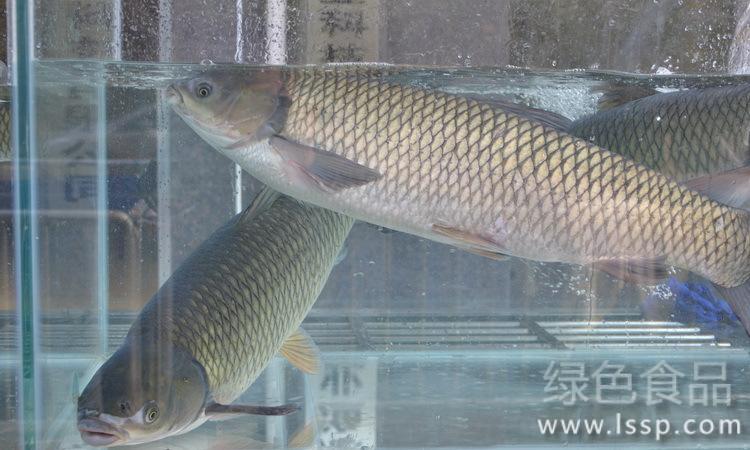
Grass carp
Selecting the pond
Choose a place with sufficient water source, good water quality and convenient transportation. For high-density holding, the pond area is large, generally 10-25 mu, with a water depth of 2-2.5 m, and convenient water intake and drainage. Equip sufficient aeration equipment; combining surface aeration and bottom aeration gives better results. 10-15 days before stocking the grass carp, do a good job in cleaning and disinfecting the fish pond, using 75-100 kg of quicklime per mu dissolved in water and splashed over the whole pond. Stock about 750 kg of market-size grass carp per mu. When putting in the grass carp, soak them in 2%-3% salt water for 5 minutes. After the grass carp holding work is completed, splash external disinfectants such as double quaternary ammonium salt iodine 1-2 times at a concentration of 0.5 mg/L to ensure the survival rate of the stocked grass carp.
Feeding management
The feed for held grass carp is mainly grass. When the temperature rises in March, feeding can begin in appropriate amounts. Since wheat grass is abundant from March to June, use a single wheat grass, feeding 2-3 times a day, with the daily feeding amount of wheat grass accounting for 30%-50% of the grass carp's body weight, judged by the grass carp finishing it within 2 hours. After June, gradually transition to feeding fine bait, preferably complete formula feed for grass carp, with the daily feeding amount accounting for about 3% of the grass carp's body weight, judged by the grass carp finishing it within 30 minutes. Adjust the specific feeding amount as appropriate according to weather, water temperature, water quality and the feeding situation of the grass carp.
Water quality management
Because grass carp have a large appetite and produce much waste, the pond must be frequently refilled with water, keeping the pond water transparency above 30 cm. From March to April, change the water once every 10-15 days, with a water change amount of 15-20 cm; from May to August, change the water once every 7-10 days, with a water change amount of 20-40 cm. While changing the water, use drugs such as strong-effect bottom purifier to improve water quality, using 1 kg per mu for high-water-level ponds. In addition, the aerator must be run frequently to maintain the dissolved oxygen content of the pond water. For high-density grass carp holding, the technique of fish farming by measuring water must be mastered skillfully, monitoring water quality regularly, and timely flushing, draining and purifying the water according to water quality conditions.