New Methods for Saving Feed and Reducing Farming Costs When Raising Geese in Summer
Geese hatched in May and moved into sheds in June are called summer geese. At this time the green grass is lush and weeds grow thickly in the water; combining grazing with feeding the geese aquatic plants lowers costs. This goose-raising method is described below:
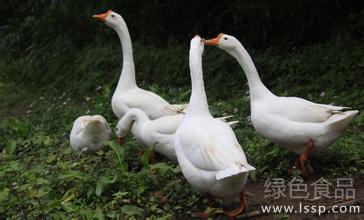
Geese
Build the goose shed beside a lake, reservoir or ditch, with a broad grazing area, ideally shaded from the sun by trees. After the goslings are moved into the shed, feed them aquatic plants as soon as they start eating; monochoria (Monochoria vaginalis) is best, as geese like to eat it. At this stage the goslings still have some yolk in their bellies, so they will not lose condition; feed monochoria once every 3-4 hours, and after 3 consecutive days of feeding they can be put out to graze. During the brooding period, watch for changes in temperature and prevent the flock from getting chilled.
After one week the geese eat more and the grazing time is extended. On clear days, graze them so they can eat dew-covered grass, and make sure they eat their fill, mainly with monochoria. The specific daily routine is:
During the hot midday rest period, gather large quantities of monochoria, arrange it in two layers and dry it on racks, avoiding direct sun exposure; after several hours, once the first layer has drained, scatter it to the flock for them to eat. Geese get hungry easily after eating aquatic plants, so feed them several meals; when the temperature drops, put them out to graze at once to train their foraging ability. The key management point in this period is "a full pen is not as good as a hungry graze." Bring the flock back at sunset, when there is still enough visibility, and scatter monochoria for them to eat. Leave an appropriate amount of monochoria for feeding before the next morning's grazing. The daily amount of monochoria gathered should be based on how much the geese eat, with a planned quantity; gather it every day without letting it pile up, keep it fresh and prevent it from rotting and spoiling. Early the next morning, because they have gone all night hungry and thirsty, provide water before grazing, then feed the aquatic plants. In this period the geese have the strongest foraging drive; when the temperature rises at 10 a.m., bring the flock back. This lasts 15-20 days, and the young geese gradually grow, develop a strong ability to digest crude fiber and can use plant protein for their own assimilation. In this period they should graze all day.
The spots for gathering aquatic plants and for grazing should be rotated to help the aquatic plants and green grass regrow. The very few weak goslings should be separated out and fed on their own, supplemented with bran, wheat bran and grain if necessary, and returned to the flock once they recover.
After one month, the young geese grow white feathers at the head, tail and both wings, commonly called the "four-point flower," and weigh about 1.5-2 kg. At this stage they should still mainly be fed to fullness, 4-6 meals a day. They are in the feather-growing stage, and their whole bodies itch, so they like to run and dart about; prevent them from getting lost, and if necessary gather aquatic plants to feed them while grazing. From the neck of a goose you can tell how much it has eaten and whether it is hungry or full. As the temperature rises, take measures to prevent water damage and thirst and to prevent heatstroke and cool them down, and put up a shade shelter for the geese to rest in. At the same time, deworm them. Levamisole is generally used, 0.1 g per tablet, one tablet per goose per day, fed for 3-4 consecutive days. After that the geese gradually grow; after two months the whole body is covered with feathers, commonly called "putting on the long gown." After three months they become adult geese; in September and October they are grazed on rice stubble fields, fattened and sold.