What to do when goats lose weight in summer heat? Scientific rearing promotes weight gain
Summer heat easily causes goats to lose appetite and drop weight. But summer has abundant water and grass; if the summer fattening is done well, it can help goats recover their strength and lay the foundation for full-fat mating in autumn and winter. So how do you make goats not lose weight but gain it in summer?
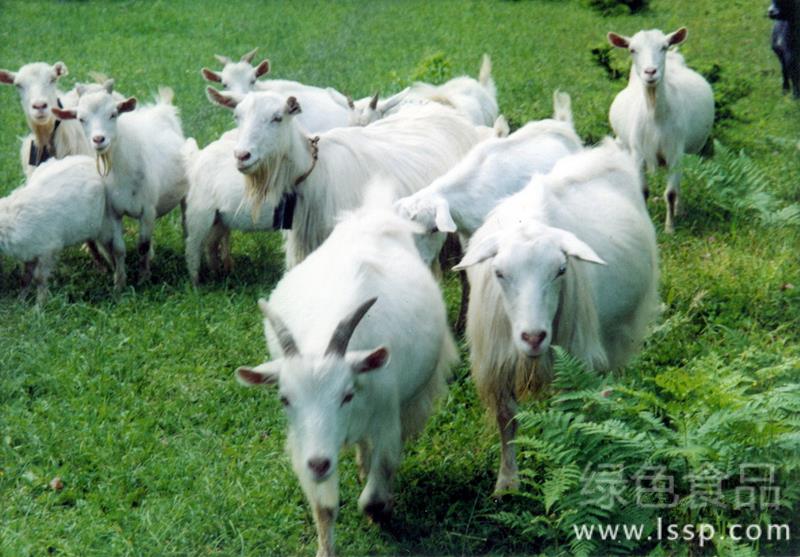
Goats
1. Deworming.In summer, ewes have generally finished lambing. Afuding (Chongkexing) can be used to expel nematodes inside goats and lice, mites, ticks, fly maggots and so on outside the body. Dosage: 5 grams of Afuding per 50 kg of body weight, added to feed and mixed evenly for feeding. Repeat once after 7 to 10 days. Lambs born in spring can be dewormed in autumn. If deworming is needed, strictly control the dosage. In areas with a high incidence of fascioliasis, drugs such as nitroxynil can be used to deworm once each in spring and autumn.
2. Grazing.In summer the weather is hot, goats like to crowd together and do not eat their fill. When grazing, go out early and return early in the morning, go out late and return late in the afternoon, and rest more at noon. Take the flock out to graze at dawn and bring it back at around 10 a.m. Take it out at 2:30 p.m. and bring it back at 7 p.m. Let the goats return to the pen to rest at noon. On sunny and hot days, graze in dry, well-ventilated places or in the shade of woods; on overcast and rainy days, graze on flat ground. Let the goats eat until 40 to 50 percent full each day. Around evening, choose places with lush, tender grass and use the scattered grazing method, repeatedly driving the flock so they eat the "second bite" several times. Before taking them out to graze each day, give the goats water, 4-6 times a day. The water should be clean running water or well water. Do not let the goats lie down and rest in damp, muddy places, so as to avoid rheumatism. On rainy days, graze with the wind so the goats' faces are not hit by rain. Since the summer solstice, keep grazing in light rain, but avoid heavy rain and torrential rain as much as possible. During thunder and lightning, do not go to steep slopes, to avoid the goats being startled and falling and getting injured.
3. Air-drying the goats.In summer the weather is hot and goats easily get internal heat, so air-drying the goats is very important. Air-drying the goats means driving the flock to a cool place to rest, letting the goats release heat and keeping them healthy. After bringing them back from grazing, if you immediately drive the goats into the pen, because they have been running, the goats feel stifled and hot and their stomachs are prone to illness. When bringing them back at noon, after the flock reaches home, do not drive them into the pen; first let them air-dry under the shade of trees. After bringing them back in the evening, drive the flock to the yard, and only when it cools down in the middle of the night drive them into the pen; they can also spend the night in an open pen. Before taking them out to graze in the morning, drive the flock outside the pen to air-dry for 1-2 hours before going out to graze. Starting from the beginning of summer, dig goat pits in the pen, pave the goat pits with wooden boards, frequently spread dry soil in the pen, and keep the pen clean, dry and well ventilated. For relatively cool two-story goat houses, the flock can be driven directly in after grazing. If the goats are listless, do not like to eat grass, or have blood in their droppings, it means the goats already have internal heat; they must be air-dried overnight for several nights, and the goats should be treated.