How to prevent and treat overeating syndrome in piglets? Newly purchased piglets are especially prone to it
When newly purchasing piglets, the long journey easily leaves the piglets hungry, so after arriving at the pig farm the piglets eat too much due to hunger, and uneven hunger and fullness easily causes piglets to develop overeating syndrome. If overeating syndrome is not treated in time, it can lead to death in piglets, so when newly purchasing piglets, attention should be paid to controlling the piglets' feed intake.
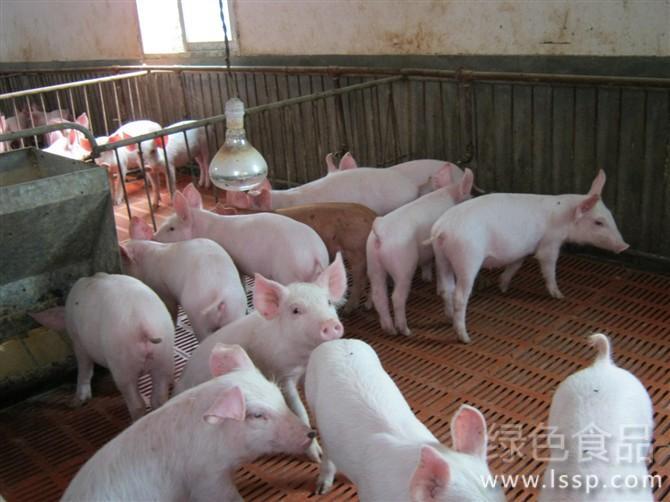
Piglets
I. Clinical symptoms:
Gastrointestinal gas buildup, abdominal distension like a drum, expansion of the stomach wall, causing digestive disturbance. Symptoms appear 15-20 minutes after eating; sick piglets breathe faster, bloodshot around the eyeballs, and some develop clouded eyes. In mild cases the symptoms disappear in 15-20 minutes; in severe cases the piglet cannot crawl, the limbs are unresponsive, mucus foam flows from the mouth and nose, and the anus protrudes until death. It has the characteristic of occurring in groups, with red, blue-purple skin.
II. Analysis of causes:
A diet mainly of concentrated feed, uneven feeding amounts, or a sudden change of feed, strong palatability, piglets overeating, and excessive feed intake cause impaired mixing of digestive juices with the feed, enlargement of stomach volume, excessive short-term retention, slow peristalsis, uneven gastric juice, abnormal fermentation, and production of sulfur-containing gases. Irregular feeding and uneven hunger and fullness are also triggers. Because of moldy feed, nitrite poisoning may occur as a complication.
III. Prevention and treatment measures:
Strengthen feeding management, feed according to required amounts, and provide balanced feed. Prevent overfullness, maintain the requirements for basic and piglet growth, and keep the feed formula reasonable and stable to prevent sudden changes. When changing feed varieties, go through a 3-5 day transition to prevent sudden changes and the stress of feed switching. When changing feed or when the weather changes abruptly, anti-stress drugs such as electrolyte multivitamins, vitamin C, and glucose powder can be added to the piglets' drinking water. When pigs weigh more than 75 kg, add 0.3% salt to the feed, stop feeding for 1 meal within 1 week, and increase the pigs' water intake. The pigs' drinking water must be kept clean and sanitary, and the height of the free-access drinker should be adjusted as the pigs grow, 15-20 cm above the pigs' backs. Moldy and spoiled feed must not be fed.
In treatment, the principle is to empty the accumulated food in the piglets' stomachs and restore the piglets' gastric function. Feeding can be stopped for 1 day, with a small amount of drinking water. To promote emptying of the stomach contents and restore motor function, abdominal massage can be performed, and the piglets can also be steadily driven to move. Severely affected piglets must be handled carefully to prevent stomach rupture.
For piglets that have already become ill, 10 ml of Bisaikeling (ammonium chloride carbamylcholine injection) can be injected per 50 kg of body weight, 2 times a day. For piglets with protruding and hardened nictitating membranes, the hardened nictitating membrane can be cut off with scissors to let it bleed. To prevent fermentation of stomach contents, 1-5 grams of ichthammol and 10-15 ml of ethanol can be added to an appropriate amount of water and administered by gavage at one time; 20-50 ml of vinegar can also be administered by gavage.