How to fatten adult meat sheep for early market
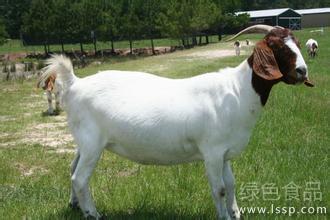
Sheep
Selection of fattening subjects. The most suitable fattening subjects should be sheep with a relatively large body frame, good health, free of disease, and good teeth; the next choice is culled old and disabled sheep. To improve fattening efficiency, natural pasture grass, straw, leaves, and other feed sources should be fully used to expand feed sources; urea and various feed additives permitted by the state should be used rationally; urea can be added to the diet of adult sheep in an appropriate amount, with the feeding amount being 2-3 g per 10 kg.W, and minerals and vitamins can account for 2%-3% of the concentrate, which can greatly improve the current conversion and utilization rate of forage.
Scientific feeding methods. The physiological characteristics of sheep as ruminants should be respected, and a reasonable feeding system should be arranged. The daily feeding amount of the diet for adult sheep varies depending on the formula, generally 2.5-2.7 kg per sheep; feed 2-3 times a day, among which one feeding must be given in the evening (after 19:00), and the distribution and adjustment of the daily feeding amount should be based on the standard that basically no feed remains in the trough; when feeding complete pellet feed, it is best to use an automatic trough for feeding, and each fattening sheep should be fed about 0.25 kg of fibrous forage to promote rumination and digestion, because the completely use of pellet feed can easily cause digestive function disorders in sheep, and even lead to disease.
Preparation of complete feed. The following two sheep fattening feed formulas are recommended: one is grass meal 35%, straw 44.5%, concentrate 20%, calcium hydrogen phosphate 0.5%; each kilogram of this formula contains 86% dry matter, 7.2% crude protein, 0.48% calcium, 0.24% phosphorus, and 6.897 MJ metabolizable energy. The other is grass meal of Gramineae 30%, straw 44.5%, concentrate 25%, calcium hydrogen phosphate 0.5%. Each kilogram of this formula contains 86% dry matter, 7.4% crude protein, 0.49% calcium, 0.25% phosphorus, and 7.106 MJ metabolizable energy.
.