Types of water-soluble flush fertilizers and their correct use methods
How many types of flush fertilizers are there? How to use them well? Please advise. Flush fertilizers generally fall into the following major categories: the first category, macroelement fertilizers, including single fertilizers such as nitrogen, potassium, phosphorus, calcium, magnesium and sulfur fertilizers, or compound fertilizers, blended fertilizers and formula fertilizers, but all must be water-soluble, with a typical application rate of...
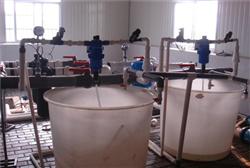
How many types of flush fertilizers are there? How to use them well? Please advise
Flush fertilizers generally fall into the following major categories:
The first category, macroelement fertilizers, including single fertilizers such as nitrogen, potassium, phosphorus, calcium, magnesium and sulfur fertilizers, or compound fertilizers, blended fertilizers and formula fertilizers, but all must be water-soluble, with a typical application rate of over ten to several tens of kg per mu. This type of flush fertilizer is the main flush fertilizer, with the largest production and the greatest use, and can be mixed with many other flush fertilizers.
The second category, macroelement plus microelement fertilizers, namely on the basis of the above fertilizers adding zinc, boron, iron, manganese, copper, molybdenum, chlorine fertilizers, etc., or compound fertilizers of several of them; they are likewise all water-soluble and must not react or produce precipitates, with an application rate of over ten to several tens of kg per mu. This type of flush fertilizer is more effective than single macroelement fertilizers, supplementing microelements, and gives better results in increasing yield and improving quality. However, this type of flush fertilizer has certain technical requirements in compounding; compounding technology and chelation technology must be used to avoid precipitation problems and fertilizer antagonism problems.
The third category, microelement fertilizers, microelement flush fertilizers based mainly on zinc, boron, iron, manganese, copper, molybdenum and chlorine fertilizers, generally mixed and compounded from several of them, with a certain amount of chelating agent added to increase plant uptake and reduce adsorption and fixation by the soil, with a typical application rate of several hundred grams to several kg per mu. This type of fertilizer, applied to plants lacking [elements], has a remarkable effect on increasing yield and income by supplementing whichever element is lacking.
The fourth category, amino acid fertilizers, uses various amino acids as the main raw material, generally industrial by-product amino acids, or amino acids produced by hydrolysis of hair or waste leather; to improve the effect, various microelements are generally added. Because of its relatively strong acidity, it is applied to soils that are not too acidic. The application rate is generally over ten to several tens of kg per mu. The effect is better when applied during the period of maximum plant nutrient efficiency.
The fifth category, humic acid fertilizers, is a fertilizer extracted from weathered coal as the main raw material through acidification and alkalization. To enhance efficiency, macroelements are generally added; because of its alkalinity, it is applied to slightly acidic soil. The application rate is generally several kg to several tens of kg per mu. This type of fertilizer has a good effect on improving soil and increasing plant drought resistance.
The sixth category, other types, including chitosan types, other organic matter, etc., industrial fermentation fertilizers, bacterial fertilizers, etc.; they all have a yield-increasing effect and can be used as flush fertilizers. This type of fertilizer is generally used as a flush fertilizer for special needs, such as improving the quality of some crops and enhancing disease resistance.
The following points should be noted when applying flush fertilizers:
First, the large-scale application of flush fertilizers in our country is mainly in winter, applied in greenhouses. In this period, because sunlight is weak, temperature is low, and ground temperature is low, even with an external heat source the needs of normal plant growth still cannot be met. Factors such as low activity of active bacteria in the soil and underdeveloped plant root systems all cause poor fertilizer uptake and poor flush fertilizer effects. Therefore, improving plant root vitality and increasing plant root growth are essential measures for flush fertilization. For example, adding a small amount of sodium synergist, sodium a-naphthaleneacetate, synergist amine (DA-6), etc. to the flush fertilizer can promote plant vitality, promote root growth, increase fertilizer uptake, and make the fertilizer effect fast, high and remarkable.
Second, compound flush application of multiple fertilizers. Because the agricultural characteristic of our country is a small-peasant economy, that is, farming, sowing and fertilizing independently with each household as a unit, the soil and fertilizer conditions vary greatly and it is not easy to uniformly promote the application of a certain fertilizer. Therefore, as scientific researchers, manufacturers and technical extension personnel, we should advise farmers to mix and flush-apply multiple fertilizers, so as to solve the lack of a certain nutrient in plants and increase the apparent and actual effect of the fertilizer.
Third, grasp the nutrient requirement characteristics of various crops. For example, leafy vegetables and gramineous crops need more nitrogen, so we should flush more nitrogen fertilizer; legumes and solanaceous fruits need more phosphorus and potassium, so we should flush more phosphorus and potassium fertilizers. Suiting the remedy to the case achieves twice the result with half the effort and improves fertilizer efficiency.
Fourth, scientific rotation of application, flushing fertilizer in small amounts many times. Especially for greenhouse crops, since they mainly rely on irrigation for water application, irrigation is generally frequent, so fertilizer can be flushed in small amounts many times, such as Chinese chives, which can be flushed once after each cutting, and solanaceous fruits such as cucumber, eggplant and pepper, which can be flushed once after each picking. And at each flush application, reasonably match macroelements, microelements and plant root growth promoters, etc.
Fifth, note that several fertilizers cannot be mixed for flush application, otherwise the effect will be reduced or there will be no effect. For example, ammonium bicarbonate cannot be mixed with strongly acidic fertilizers for flush application, amino acid fertilizers cannot be mixed with humic acid fertilizers for flush application, and when phosphate fertilizers are mixed with zinc, manganese, iron, copper and other fertilizers for flush application, chelating agents must be added, etc.
In short, flush fertilization is already an important means of fertilizer application; we should constantly summarize the rules and scientifically flush-apply fertilizers to achieve the best yield-increasing effect.
Click to get more water-soluble fertilizer application techniques
Click to get more fertilizer application techniques