How to judge soil fertility? A few simple methods to teach you
How do you know whether soil is fertile or poor? Here are some methods to tell whether soil is fertile or poor: First, look at soil color. Fertile soil is darker in color, while poor soil is lighter in color. Second, look at soil depth. Fertile soil is generally more than 60 cm deep, while poor soil is relatively shallower. Third, look at soil workability. Fertile soil is loose...
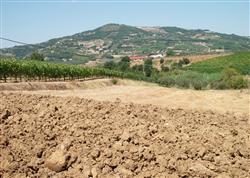
How do you know whether soil is fertile or poor? Here are some methods
To tell whether soil is fertile or poor, you can refer to the following methods:
First, look at soil color. Fertile soil is darker in color, while poor soil is lighter in color.
Second, look at soil depth. Fertile soil is generally more than 60 cm deep, while poor soil is relatively shallower.
Third, look at soil workability. Fertile soil is loose and easy to cultivate; poor soil clings to the plow and is laborious to work.
Fourth, look at soil sedimentation and cracking. Fertile soil does not settle easily, and its soil cracks are numerous and small; poor soil settles very easily, tends to harden, and its soil cracks are few and large.
Fifth, look at the soil's water-holding capacity. If water infiltrates slowly and one irrigation can be retained for 6-7 days, it is fertile soil; if water does not infiltrate or infiltrates quickly along cracks, it is poor soil.
Sixth, look at water quality. If the water is smooth and greasy, sticks to the feet, and produces large bubbles in sunlight or when stepped on, it is fertile soil; if the water is clear and colorless, and the paddy field produces no bubbles, or the bubbles are small and disperse easily, it is poor soil.
Seventh, look at the night moisture phenomenon. If there is night moisture, drying and then becoming wet again, and it is not easy to dry out or harden, it is fertile soil; if there is no night moisture phenomenon and the soil is compacted and hardened, it is poor soil.
Eighth, look at the fertilizer-holding capacity. Soil with strong nutrient supply, sufficient and long-lasting nutrient supply, or high potential fertility all belongs to fertile soil.
Ninth, look at plants. Soil where redtop, goosefeather grass, shepherd's purse, and similar plants grow is fertile soil; soil where needle grass, duck-tongue grass, three-edge grass, wild orchid, wild chive, and similar plants grow is poor soil.
Tenth, look at animals. Soil with field snails, loaches, earthworms, large leeches, and similar animals is fertile soil; soil with small ants, large ants, and similar animals is mostly poor soil.
Click to get more compound fertilizer application techniques
Click to get more fertilizer application techniques