Meat duck quality determines economic benefits: how to improve meat duck quality
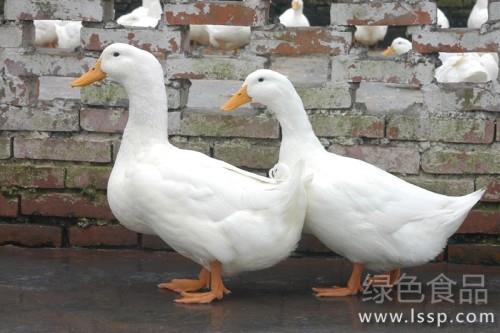
Meat duck
I. Moisture-proofing of ducklings to reduce the incidence of breast and leg problems
Moisture-proofing of ducklings mainly means reducing the humidity of the floor and air in the brooding house. The main brooding methods are: 1. Litter floor rearing, frequently replacing the litter with fresh, dry litter; 2. In spring and summer, change from litter floor rearing to wire-floor rearing, so that the water spilled when ducklings drink and play in the water falls below the wire and drains away, while droppings also fall below the wire, which can significantly reduce humidity inside the house; 3. During the brooding period, strengthen ventilation to reduce humidity inside the house. Because moisture-proofing work was strengthened during the brooding period, the brooding rate increased from 90% to more than 98%, and the ducklings were robust, with a reduced incidence of breast and leg problems, laying a good foundation for raising meat ducks well.
II. Strengthen management to reduce the occurrence of “feather pins” on duck bodies
For duck flocks raised in confinement, if the site is damp and muddy, it will not only affect weight gain, but the feathers on the breast and abdomen of the ducks are also prone to falling out, and the feather follicles soon grow new feather buds as thick as pins, commonly known as “feather pins.” During slaughter, plucking is difficult, and after pulling out the “feather pins,” the skin also leaves relatively large pores, which affects carcass quality and greatly reduces the economic benefits of duck raising. Therefore, confined rearing sites should be designed with a certain slope to facilitate drainage, and stagnant water should be drained promptly during the rainy season. At the same time, stocking density should be reduced so as to keep the site dry, clean, and hygienic, giving the duck flock a comfortable environment, improving their constitution, and ensuring their health, so that they can gain weight quickly and have good carcass meat quality.
III. Management should implement the “five fixed” practices
That is, fixed personnel, fixed times, fixed feed, fixed equipment locations, and fixed rules of behavior. In addition, frequently observe the ducks' posture, behavior, feed intake, water intake, droppings, breathing, and other conditions, and if abnormalities are found, promptly take corrective or preventive measures.