How to Manage Meat Ducks in Summer Despite Their Poor Heat Dissipation
Meat ducks grow fast but have poor heat dissipation. Doing a good job of summer feeding management for meat ducks and eliminating the effects of hot weather on their health is the key to achieving good production results and economic benefits in meat duck farming.
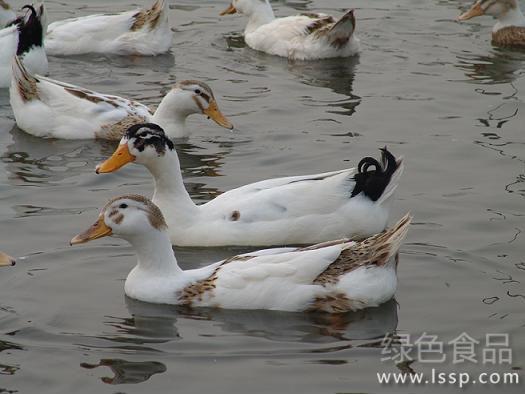
Meat ducks
1. Strengthen ventilation inside the duck house, lower the house temperature, and remove residual heat and harmful gases. In addition, equipping the duck house with a certain number of electric fans or air coolers helps dissipate body heat from the ducks.
2. Strengthen heatstroke prevention and cooling. ① Supply sufficient clean running water; ② Regularly sprinkle some cool water on the exercise yard, walls and the floor of net-rearing areas to lower the house temperature; ③ Cover the duck house roof and front wall with shade netting to reduce solar radiation on the duck house; ④ Install louvers on the duck house to reduce direct sunlight; ⑤ Appropriately reduce stocking density according to the size of the ducks.
3. Because it is hot during the day, meat ducks eat very little; switching to nighttime feeding can achieve normal feed intake. Cool water should be used to mix the feed, mixed and fed on the spot, and each batch of mixed feed should not be too much to prevent it from turning sour and spoiling.
4. Add some anti-stress additives such as vitamin C to the feed, or add some electrolytes to the drinking water to reduce heat stress.
5. Carry out routine vaccinations properly and strictly implement hygiene and epidemic prevention measures: ① Always keep the inside and outside of the enclosure clean and sanitary, and insist on disinfecting once a week; ② Continuously repair and clear the drainage system to ensure there is no sewage in the exercise yard or duck house; ③ Control the breeding of mosquitoes and flies.