Detailed Explanation of Prevention and Treatment Methods for Common Diseases in Caged Laying Hens
Caged laying hens are generally susceptible to three common diseases: fatty liver syndrome, egg drop syndrome, and fatigue. Their symptoms and prevention and treatment methods are described below:
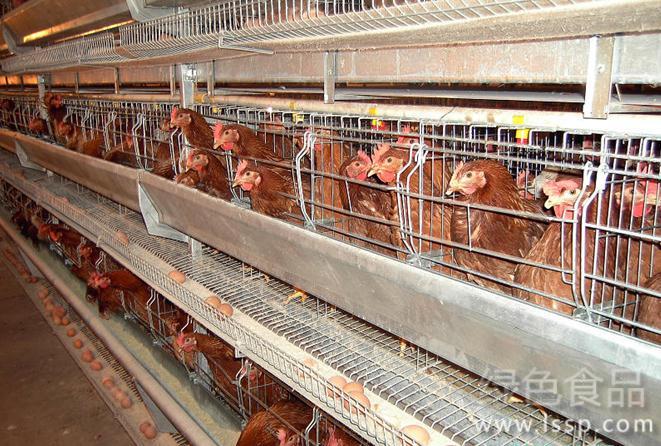
Caged laying hens
Fatty liver syndrome.This is relatively common in high-yielding laying hen flocks. On the surface, the hens appear to be in good condition, but their egg production rate gradually declines, or the egg production rate fails to reach its peak, or the peak period is shortened. In severe cases, some sick hens die suddenly. Because fatty liver in laying hens is very common and is not easily noticed under normal conditions, it is easily overlooked by farmers. Necropsy reveals severe fat deposition in the liver of laying hens, with excessive fat deposited around organs such as the liver and kidneys, leading to liver hemorrhage in laying hens and causing fat metabolism disorders. Prevention and treatment methods: 1. Increase the protein level of the feed by 1%-2%, and add a certain amount of wheat bran; for overly fat hens, add 55 g of choline, 150 mg of compound vitamins, and 50 g of methionine per 100 kg of feed; 2. Restrict feeding before the laying period to control the body weight of the hens.
Egg drop syndrome.This disease is more common in laying hens that lay brown-shelled eggs. When the egg production rate drops to 20%-50%, egg quality also declines, with thin-shelled eggs, soft-shelled eggs, colorless eggs, waisted eggs, and sand-shelled eggs appearing. The hatchability of breeding eggs declines, and the rate of dead embryos rises; even if chicks hatch, their vitality is weak and the survival rate is low. Sick hens pass soft droppings and green droppings; the comb turns purplish-blue, and neurotic symptoms appear; feed intake does not decrease. Prevention and treatment methods: 1. Add choline and vitamin B12 to the daily ration to protect the liver and control infection; 0.2% oxytetracycline or 0.2% furazolidone may be added. 2. Increase the protein level of the feed and keep it at 18%-19%.
Cage layer fatigue.This is mainly caused by a deficiency of calcium, phosphorus, and vitamin D in the hens' daily ration, or an improper calcium-to-phosphorus ratio, as well as long-term lack of exercise, and it occurs mostly shortly after the start of laying or in the early laying period. Sick hens often lie on their sides in the cage, unable to stand, and later become paralyzed; their responses are sluggish, and many sick hens suffer fractures of the wing and leg bones, with bone walls that are thin and brittle. Prevention and treatment methods: 1. Add an appropriate amount of vitamin C or vitamin D in the early laying period. Keep the available phosphorus in the feed at 0.45%. For severely ill hens, inject 50 international units of vitamin D intramuscularly to promote calcium absorption. 2. Persist in feeding compound feed. 3. Place the affected laying hens on the ground to raise them and let them move freely.