What to Do About Low Hatch Rates in Pheasants? Teach You How to Improve the Hatch Rate
Pheasant hatching and breeding: however, because farmers lack the techniques and experience in hatching, the hatch rate is low. The key points of pheasant hatching are introduced as follows:
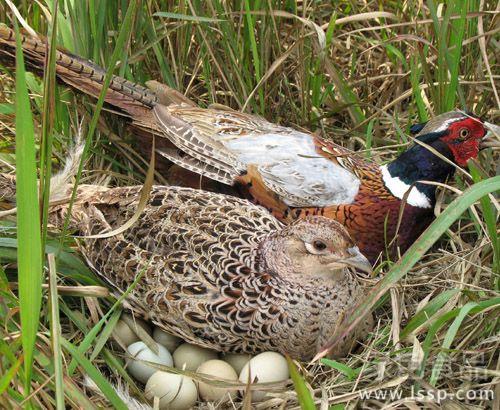
Pheasant
Disinfection of hatching eggs.Pheasant hatching eggs need to be disinfected twice. The first time is after the pheasant egg is laid, that is, within half an hour of laying. The second time is before hatching. Common disinfection methods include: first, fumigation with formalin. Use 15 grams of potassium permanganate plus 30 milliliters of formalin per cubic meter of space, carried out in a sealed fumigation cabinet; the second time is carried out inside the incubator. The chemicals must not be placed in metal containers; porcelain or glass containers are more suitable. Second, soaking in potassium permanganate. Soak the hatching eggs in a 0.05% potassium permanganate aqueous solution for 3 to 5 minutes. Third, spraying with benzalkonium bromide. Spray the egg surface with a 0.1% benzalkonium bromide solution.
Turning the eggs.During the incubation process, turn the pheasant eggs once every 2 hours, and control the turning angle of each layer between 45 and 90 degrees; it must not be less than 45 degrees or greater than 90 degrees.
Cooling the eggs.Cooling the eggs should begin after 5 days of incubation, twice a day, especially during the 16 to 23 days of incubation, because the chicks have already taken shape and have metabolic function, and their own temperature is relatively high, reaching 39 to 40°C. Therefore, during this period the number of times the eggs are cooled must be increased, and the eggs must be cooled once every 4 to 6 hours; otherwise, the chicks can easily be suffocated to death by excessive temperature. The time for each cooling of the eggs should preferably be 15 to 20 minutes.