Swine flu is detrimental to pig fattening; how to prevent and control swine flu in summer
Swine flu is an acute infectious disease of the respiratory organs, prone to occur in all four seasons, and most common at the transition between seasons. Pigs of different ages, sexes and breeds are all susceptible. The main symptoms are sudden fever in sick pigs, listlessness, reduced appetite or no eating, often huddling together to lie down, unwillingness to move, difficulty breathing, coughing, and mucous secretions flowing from the eyes and nose. If there are no complications, most sick pigs can recover within 5 days to 10 days; if management during the onset period is improper, complications are easily triggered, increasing the mortality rate. The following methods are commonly used in breeding production for prevention and control.
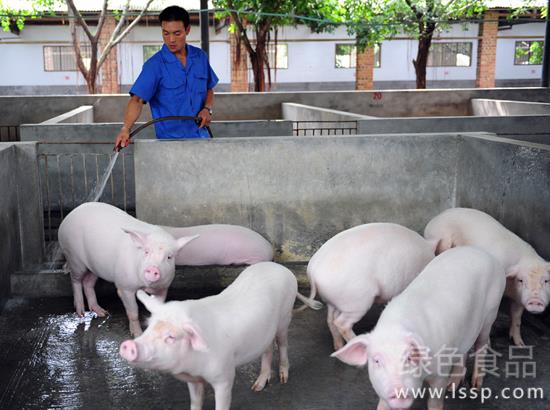
Pig farm cleaning
1. Do a good job of cleaning and disinfecting the pig pens. Regularly carry out cleaning and disinfection inside and outside the pig pens, control the introduction and spread of pathogens as much as possible, and reduce the incidence of disease in pigs.
2. Strengthen feeding management. Pay attention to ventilation in the pig house, maintain air circulation, reduce ammonia concentration, and reduce the occurrence of respiratory diseases in pigs. Control the temperature of the pig house well, cool it in summer and keep it warm in winter, and keep the temperature difference between morning and evening each day as small as possible. Farrowing houses and nursery houses require small-environment warmth retention and large-environment ventilation inside the pig house. Strictly implement the all-in-all-out feeding method, so that the pigs in the same pig house are all transferred out at the same time, and at least implement all-in-all-out in the same pen. Avoid raising pigs of different ages together. Feed high-quality feed to meet the nutritional needs of the pig herd at different periods and stages, and maintain a reasonable and balanced nutritional level for the pig herd. Swine flu is easily transmitted. Once sick pigs are found, the sick pigs should be isolated immediately, and asymptomatic pigs in the same pen should be given Wenbijia or Kedu Jingang mixed into feed, drinking water or administered orally.
3. Symptomatic treatment. For severely ill pigs, according to body weight, use penicillin, streptomycin, virazole, analgin, or enrofloxacin, virazole, dexamethasone, aminopyrine for a one-time intramuscular injection, 2 times a day, for 4 days to 5 days continuously. At the same time, administer the traditional Chinese medicine formula: 20 grams of Bupleurum chinense, 15 grams of Smilax glabra, 20 grams of tangerine peel, 20 grams of mint, 15 grams of chrysanthemum, 15 grams of perilla, 20 grams of Saposhnikovia divaricata, decoct in water and feed once, 1 dose per day, for 2 doses to 3 doses continuously. To prevent secondary infection, sick pigs should take antibiotics or sulfonamide drugs, and pigs with severe coughing and wheezing should be given antitussive and expectorant drugs.
4. Vaccine prevention and control. In high-incidence areas, each batch of pigs should be vaccinated twice with swine flu adjuvant inactivated vaccine, which can effectively prevent swine flu.