Chicken tapeworm disease can cause the death of chicks; how to prevent and control it on chicken farms in summer
In summer, a humid environment, poor sanitary conditions and poor feeding management all make chickens susceptible to tapeworm disease. The main harm of tapeworm disease is that it robs the chickens of nutrients, damages the intestinal wall, and its metabolic products poison the chickens; when a large number of tapeworms are parasitic, they can block the intestines.
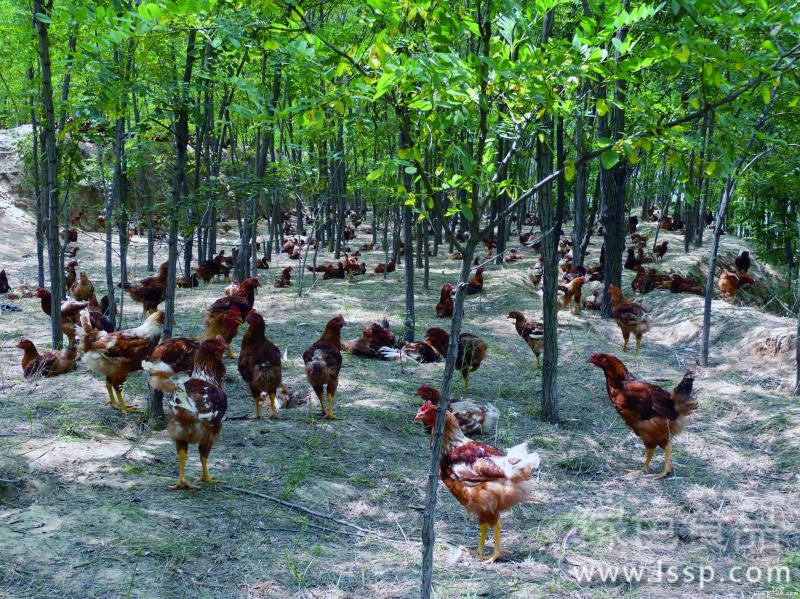
Chicken farm
1. Epidemiology of tapeworm disease: The source of tapeworm infection is mainly diseased chickens or tapeworm-carrying chickens, and healthy chickens become infected through the mouth. Chickens of all ages can be affected, but the mortality rate is highest in chicks aged 25 to 40 days. It is often a mixed infection of several tapeworm species. Because the intermediate hosts of tapeworms are widely distributed, tapeworm disease has a wide distribution. The intermediate hosts include snails, ants, house flies, scarab beetles, ground beetles and other beetles. After these beetles swallow the gravid proglottids or eggs of tapeworms excreted with the feces, they digest the proglottids and egg shells, and the released hexacanth embryos bore into the body cavity of the beetles and develop into cysticercoids after about 2 to 3 weeks. Chickens become infected after eating these intermediate hosts carrying cysticercoids. The cysticercoids attach to the host's intestinal wall with their suckers and rostellum, and develop into adults after about 20 days.
2. Clinical features and necropsy changes:Clinically, the feces are often thin and contain mucus, and white proglottids the size of rice grains can often be seen in the feces and can wriggle. The chickens' appetite decreases and water consumption increases. In severe cases, slow movement, ruffled feathers, twisted head and neck can be seen, laying hens show a decline in egg production or stop laying, and finally die of exhaustion.
3. Necropsy changes: In the early stage, the small intestinal mucosa of the chickens is thickened, with bleeding or ulcerated nodules; scraping the mucosa for microscopic examination can reveal the tapeworm scolex. When adult worms are parasitic, the intestines of the chickens are obviously thickened and the small intestine is uneven in thickness. Ulcers 8 to 10 mm in diameter can sometimes be seen on the inner wall of the intestine, and adult tapeworms can be found in the intestinal cavity.
4. Commonly used prevention and control techniques
1. Routine prevention techniques: The feces in the chicken house should be removed in time and transported to a designated place for piling and fermentation treatment, using biological heat to kill the eggs in the chicken manure and prevent the spread of pathogens and contamination of the environment; the filth in the environment around the chicken house should also be removed, and insecticides should be sprayed to eliminate the intermediate hosts; cage rearing should be implemented, and fly control measures should be taken in the chicken house; the flock should be inspected regularly, diseased chickens should be treated in time, and adult chickens should be dewormed regularly.
2. Drug prevention and control techniques. The specific drug for preventing and controlling chicken tapeworm disease is praziquantel. When tapeworm disease occurs, a 2% praziquantel premix can be mixed into the feed at a ratio of 0.2%, given as a single feeding concentrated in the afternoon, and the chicken manure should be cleaned up the next morning. In summer, mix it into the feed once a month at the preventive dose.