Prevention and Treatment of Common Complications in Sheep Colds
When sheep catch a cold, the onset is relatively rapid, with listlessness, a lowered head and drooping ears, reduced or absent appetite, rumen atony, and reduced or stopped rumination, with dry feces. Body temperature rises, and skin temperature is uneven; in most affected sheep the ear tips, muzzle, and lower limbs are cold to the touch, and the conjunctiva is red or swollen, with fear of light and tearing. There is coughing and nasal congestion; initially the nasal discharge is serous, later becoming mucous or mucopurulent. Respiration, pulse, and heartbeat accelerate, and alveolar breath sounds are harsh; if bronchitis develops concurrently, dry or moist rales are heard. The course of this disease is relatively short, generally 3-5 days, after which symptoms improve. If treatment is not timely, lambs are prone to secondary bronchitis, pneumonia, or other diseases.
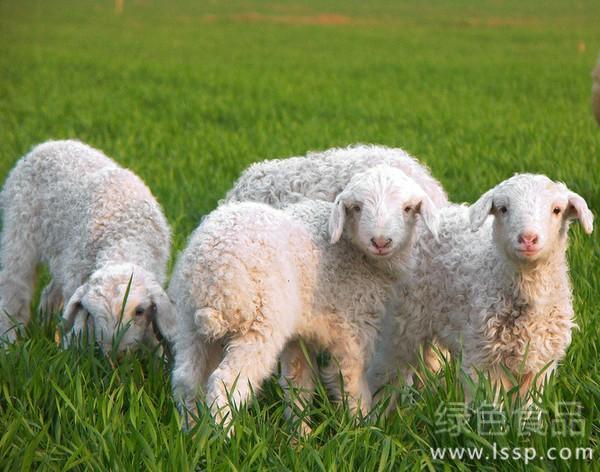
Sheep
I. Differential Diagnosis
In sheep with influenza, body temperature suddenly rises to 40°C, systemic symptoms are more severe, spread is rapid, and there is obvious epidemic character, often with large numbers affected. In wind-heat cold, body temperature rises to 39-40°C, exhalation is coarse and feels hot, alveolar breath sounds are harsh and heavy, and in some cases dry rales can be heard; the pulse is floating and rapid, the throat is swollen, the mouth is dry and the tongue red, coughing is not smooth, the ears and nose feel hot, the animal fears heat and prefers coolness, urine is scanty and yellow-red, with a sensation of painful urination. In wind-cold cold, body temperature is normal or slightly elevated, breathing is not rapid, the exhaled breath feels cool, the heartbeat is not rapid, the pulse is floating and tight, the tongue is greenish-yellow or greenish-white, the coat is rough and standing on end, the back is arched and the animal fears cold, with clear nasal discharge and clear, abundant urine.
II. Preventive Measures
Sick sheep should rest fully and be given plenty of drinking water; for malnourished sick sheep, concentrate feed should be appropriately increased to enhance the body's cold tolerance; prevent sheep from suddenly being exposed to cold.
III. Treatment Methods
The principles for treating sheep colds are to relieve fever and pain and to dispel wind and dispel cold. Intramuscular injection of 5-10 milliliters of compound aminopyrine injection, 1-2 times/day; Bupleurum injection, 5-10 milliliters, or compound quinine, Baierding, Andrographis paniculata, Houttuynia cordata, and other injections. To prevent secondary infection in sheep, antibiotic drugs may be used at the same time.