Summer high temperatures have a big impact on beef cattle, so how should cooling measures be implemented?
In the process of beef cattle farming, conditions are greatly affected by the temperature inside the cattle barn, and high temperature and high humidity in summer intensify the impact on beef cattle. Therefore, it is crucial to seek economically effective cooling techniques and equip cattle barns with cooling facilities.
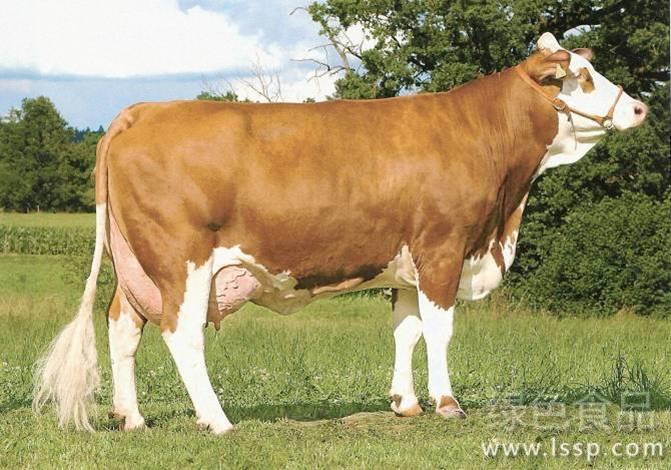
Beef cattle
1. Heat insulation measures for beef cattle barns. Choose perimeter protective structure materials with good heat insulation performance and a suitable price. In summer, sunlight shining on the barn roof is easily transmitted into the barn. To improve the heat insulation performance of the beef cattle barn roof, in areas where heat prevention is the main concern, a ventilated roof can be used, building the roof in two layers; the air between the layers, heated by the sun, becomes lighter and is discharged from the exhaust openings, while cool air flows in, thereby reducing heat. The roof and sunny-side walls of beef cattle barns should use light-colored, smooth outer surfaces to reduce the heat radiation of sunlight.
2. Cooling of beef cattle barns. To lower the temperature of the surrounding environment of beef cattle barns, a horizontal board can be added above windows to block sunlight coming from above the window opening; for barns with exercise yards or solar greenhouses, a shade shed can be set up or vines can be planted for shade. Planting trees for greening in summer can reduce solar radiation heat and help lower the temperature of the surrounding environment of beef cattle barns. Therefore, trees and grass can be planted in and around beef cattle farms, but it is not advisable to plant many tall trees, as this affects ventilation and will also attract wild birds, which is unfavorable for disease prevention.
3. Ventilation measures for beef cattle barns. In summer, when the temperature inside the barn is higher than outside, ventilation can carry away heat inside the barn and can also increase air flow speed; as it passes the beef cattle, it carries away the heat they give off, and at the same time it can promote evaporative heat loss from the bodies of the beef cattle. Air cooling machines, fans and other facilities can be installed to strengthen ventilation.
4. Layout of barn buildings. In addition to considering disease prevention and lighting, the spacing between buildings and beef cattle barns also needs to consider ventilation. The layout should be reasonable, and the spacing should not be too small, generally no less than 10 m. For the internal structure of beef cattle barns, to facilitate ventilation, it is not advisable to set up partition gable walls; the partition walls between pens are best made of iron fences. The positions of ventilation openings should be reasonably arranged to increase the air flow speed inside the barn, ensure uniform air flow, and allow it to pass through the beef cattle. Air inlets should be set in the positive pressure zone, and exhaust openings in the negative pressure zone, to ensure cross-ventilation in the cattle barn. Air inlets should be evenly arranged to ensure uniform ventilation inside the barn, so that beef cattle in all parts of the barn can feel a cool airflow. To allow the airflow to pass around the bodies of the beef cattle, low-level vents can be set up for ventilation.
5. Evaporative cooling. In a high-temperature environment, beef cattle mainly rely on evaporative heat loss. When the ambient temperature is higher than the body surface temperature, the body can only rely on evaporative heat loss to maintain body heat balance. Therefore, directly spraying the bodies of beef cattle can effectively relieve heat stress in beef cattle; at the same time, sprinkling water on the ground, spraying the roof, and misting inside the barn can all serve the purpose of cooling the environment.