Goslings Are Prone to Heatstroke in Summer High Temperatures: How to Get Through Summer Safely
In the scorching summer, newly hatched goslings are prone to heatstroke and gastroenteritis, which can cause death, because their down is incomplete and their digestive function and other systems are not fully developed. So how can goslings get through summer safely?
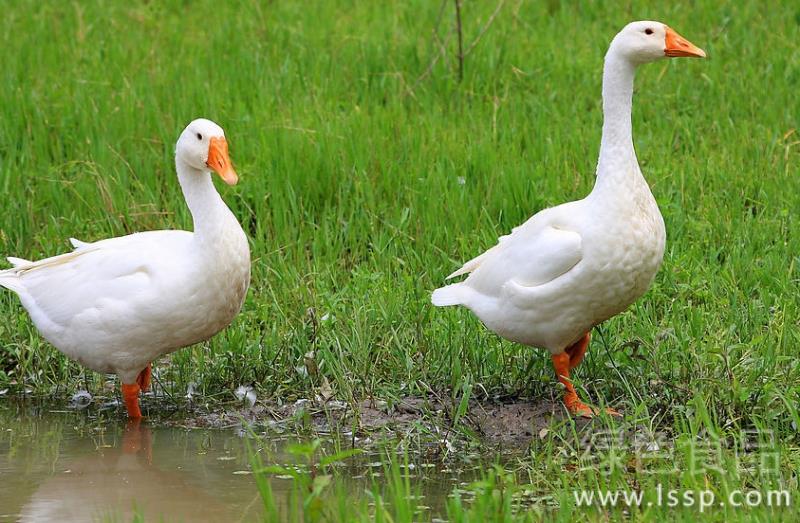
Geese
Prevent heatstroke. Newly hatched goslings have relatively sparse down and a poor ability to regulate their own temperature, so special attention should be paid to keeping them warm and preventing heatstroke. Generally, goslings aged 1 to 5 days require a temperature of 26°C to 30°C, and after that the temperature should be lowered by 1°C to 2°C every 7 days (reasonably control cooling and warmth retention according to climate changes). Do not herd them out to pasture at midday in summer; let the goslings rest in a shady place, and add heat-stress-resistant additives such as minerals and various vitamins to their drinking water.
Prevent enteritis. Newly hatched goslings do not yet have fully developed gastrointestinal tract and digestive and absorptive functions, so they cannot be fed only green vegetables; otherwise, gastroenteritis is easily caused. They should be fed evenly in combination with rice, broken rice or compound feed. As the goslings grow, the green feed in the daily ration can gradually increase to 9%, and the proportion of concentrate feed can gradually decrease to 10%.
Do a good job of disease prevention. When raising geese in summer, the feed must be fresh, and feeding moldy feed is prohibited. Clean the site frequently, change the bedding straw often, strengthen disinfection of the goose house, and keep the goose house clean and dry. Wash the feed troughs and drinkers every day, disinfect them regularly, keep the goose house clean and dry, wash the feed troughs and drinkers every day, disinfect them regularly, select antibiotics and feed additives in a targeted way, and do a good job of vaccination.
Ventilation and cooling. Build a sun-shading and wind-blocking cool shed in the activity area outside the goose house. Use nylon netting or fencing for the front wall of the goose house, and open windows at high and low positions on the other walls. The goose house should be spacious, and the house temperature should be kept within 26°C to prevent crowding.
Spray water to cool down. During the high temperatures each day, spray the ground, walls and geese with cool water; the flock can also be disinfected in the afternoon.