Prevention and Treatment Methods for Sheep Suffering from Poor Heat Dissipation and Susceptibility to Heatstroke in Summer
In summer, the weather is hot, and because sheep have poor heat dissipation, improper management can very easily lead to heatstroke. Heatstroke in sheep includes sunstroke and heat exhaustion. Causes: sunstroke is caused by direct exposure of the head to intense sunlight, overheating the head and causing congestion of the brain and meninges. Heat exhaustion is caused by excessively high external temperatures, and damp, stuffy, crowded and cramped sheep sheds, or poor ventilation during transport by vehicle or boat, causing heat to accumulate in the body.
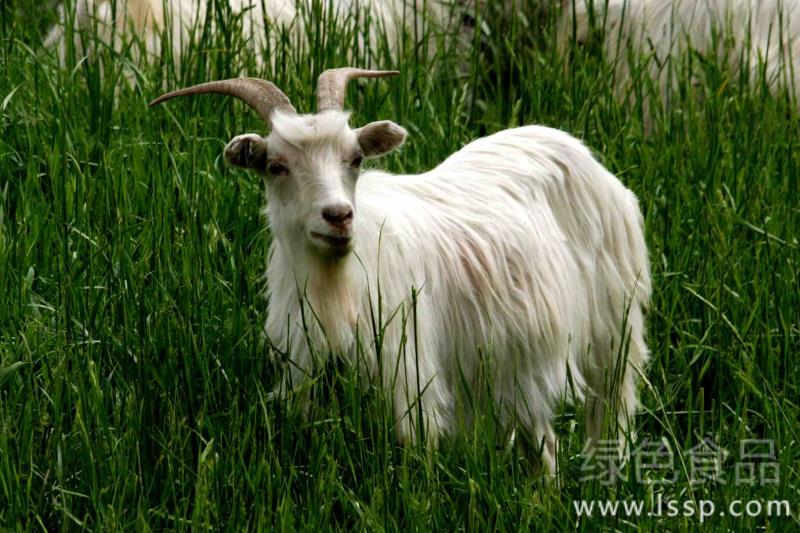
Sheep
Symptoms: In the early stage of sunstroke, the sheep is depressed, sometimes dizzy, with weak limbs, unsteady gait, and loss of coordination, suddenly lies down, and appears fearful; sometimes the whole body breaks out in cold sweat. The condition develops rapidly, with heart failure, rapid breathing, and irregular rhythm; sometimes the body temperature rises, and some sheep become paralyzed over the whole body, often experiencing severe spasms or cramps, and dying quickly. In heat exhaustion, the body temperature rises sharply, skin temperature increases, the whole body sweats, the sheep is fearful and restless, and obvious general cerebral symptoms appear. As the condition deteriorates rapidly, there is heart failure, cyanosis of the mucous membranes, and difficulty breathing; shortly before death, the body temperature drops, the sheep becomes comatose, and it sinks into a state of asphyxia and cardiac paralysis.
Preventive measures: Build good sheep sheds. Sheep pens and enclosures should be spacious and well ventilated, and feeding troughs and drinking areas should be provided with shade shelters or shaded by trees, so as to avoid an excessively hot environment as much as possible. Control density well. The hotter the weather, the more sheep tend to huddle together. If the flock density is too high and the sheep crowd each other, they may die of heatstroke due to stuffiness. Therefore, for flocks with excessive density, groups should be split appropriately so that flock density remains at 60-80 sheep, and each sheep in the shed should have 0.8 sq m of resting space. Do grazing well. For summer grazing, sheep should be taken out early and brought back early in the morning, and taken out late and brought back late in the afternoon. Grazing should as much as possible be chosen on shady slopes with weaker sunlight, to avoid and shorten the time of direct sunlight exposure. Grazing at noon is strictly prohibited, and where conditions permit, night grazing can also be carried out. Use cool water well. In hot seasons, sheep have high water requirements and should drink water at least 4 times a day; in particular, they must each drink once before grazing and once after returning. If the sheep sweat a lot, a little salt can be added appropriately. Sheep should be bathed regularly; when bathing conditions are not available, they should still be frequently sprayed with cool water and showered to cool down. Do transport well. When trading and transporting sheep, long-distance transport of sheep in the hot summer should be avoided.
Treatment methods: Cooling down. Once a sheep suffers heatstroke, it should quickly be moved to a cool, well-ventilated place, and water should be poured over the sheep's head or cold water enema used to dissipate heat; the sick sheep can also be driven into water until the sheep's body heat drops to normal temperature. Bloodletting and fluid replacement. Venesection can be performed according to the sheep's size and nutritional condition, and at the same time 500 ml-1000 ml of normal saline or glucose saline can be injected intravenously. Symptomatic treatment: for sheep that are excited and restless, intramuscular injection of 2 ml-4 ml of chlorpromazine or oral administration of 0.1 g-0.4 g of barbital, or intravenous injection of 2 ml of jingsongling, or intravenous injection of 50 ml of 25% magnesium sulfate; when the sheep has heart weakness, intramuscular injection of the cardiotonic 20% caffeine sodium benzoate; for sheep whose heartbeat has stopped, artificial respiration can be performed, or the central nervous system stimulant 25% nikethamide 210 ml can be used, and antipyretic drugs such as analgin can also be selected, or oral administration of cooling stomachics such as gentian, rhubarb, artificial salt, and peppermint water.