Chickens Are Prone to Illness in Summer Heat: How to Manage Heat Prevention and Cooling
In summer, temperatures are high and humidity is high, with little temperature difference between day and night. Therefore, cooling equipment such as fans and water curtains should be used reasonably, adapted to local conditions and adjusted according to the chickens' condition.
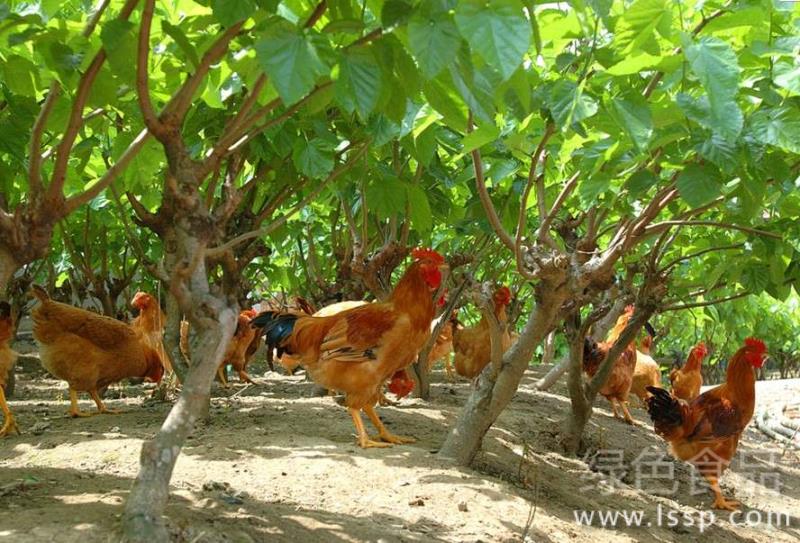
Chicken
I. Common Problems in Broiler Chickens in Summer:
1. Fans are not started in a timely manner for fear that the flock will catch a draft, causing the flock to grow in an environment of excessively high temperature, high humidity and poor ventilation during the early stage. When fans are used, the air inlets are small and improperly positioned, causing excessively high local air velocity inside the chicken house.
2. Because fans were not used in the early stage, the flock simply cannot endure it in the middle and later stages, so fans are suddenly used, in large numbers, for long periods and at high air velocity. The flock has no process of adaptation, feed intake declines, and gastrointestinal and respiratory diseases occur.
3. When using water curtains, the age in days for use is not well judged. It is unclear at what inside and outside temperature of the chicken house the water curtains should be used, and the number of fans to start is not well controlled. The flock catches cold, develops diarrhea, and infectious viral lesions are induced.
4. Insufficient cooling equipment, power outages, high flock density, etc.
II. Measures for Heat Prevention and Cooling of Broiler Chickens in Summer:
1. Enhance the insulation performance of the chicken house: in summer, about 60% of solar radiant heat enters the chicken house through the roof. Increasing roof insulation is the most effective measure for heat prevention and cooling in summer. For example: increase the roof thickness; a straw curtain more than 20cn thick can lower the chicken house temperature by 3-5°C. In addition, lay shade netting over the entire top of the chicken house and extend it more than 3 m beyond the chicken house on the sunny side, which can reduce radiation and lower the house temperature by more than 3°C.
2. Install exhaust fans: for 2000 chickens, install 6 units, 3 units per row, 5—7 m from the door, with 11—14 m between fans. Use a relay-style blowing method, with a maximum air volume of 8—9 cubic meters per hour per kilogram of body weight.
3. Use spray cooling: install water pipes at the ridge of the chicken house, prick some small holes, and use a water pump to force water into the pipes for natural misting. This method is practical, convenient and economical.
4. Administer anti-heat-stress drugs: sodium bicarbonate, V—c, Huoxiang Zhengqi, etc.
5. Use traditional Chinese medicines for heat prevention and cooling: Huoxiang (Agastache rugosa), Baizhi (Angelica dahurica), Sugeng (Perilla stem), Gegen (Pueraria lobata), Cangzhu (Atractylodes lancea), Yunling (Poria cocos), Huangqin (Scutellaria baicalensis), Huangbai (Phellodendron amurense), Shigao (gypsum), Banlangen (Isatis root), Shuanghua (honeysuckle), Lianqiao (Forsythia suspensa), Gancao (licorice), etc. Prepare and use the formula at 0.5—1 gram per kilogram of chicken body weight.