What to do when water quality deteriorates and fish grow slowly in summer fish farming
1. In summer, water temperature is high, and the water body stratifies with temperature: the bottom layer is low-temperature water with low dissolved oxygen, and water quality is prone to deterioration.
Countermeasures: Control the depth of the fish pond, keeping the water depth at 1.2-1.5 m, so that the water body can convect on its own from top to bottom and avoid an oxygen-deficient zone at the bottom of the fish pond. At noon on sunny days, run the aerator more to let the water body convect from top to bottom. When water quality deteriorates, it indicates that the concentrations of ammonia nitrogen or nitrite in the pond water are high. A low-quality improver can be splashed over the whole pond to reduce the content of organic matter, ammonia nitrogen and nitrite in the fish pond, and at the same time the use time of the aerator should be extended.
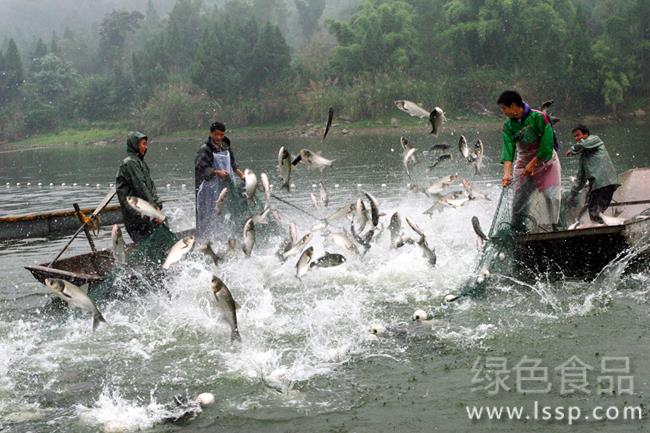
Fish farming
2. In summer, water temperature is high, the fish's digestion and absorption rate is low, growth slows down, physiological metabolism is poor, and stress resistance declines.
Countermeasures: For fish ponds with water inlet and drainage conditions, before or after running the aerator, add well water to the pond, and at the same time let the upper layer of high-temperature water overflow and drain from the other side of the fish pond. For fish ponds without such conditions, water hyacinth, duckweed and other upper-layer aquatic plants can be introduced so that they cover 1/10 of the water surface, which can lower the water temperature. Change the fish feeding time to before 11 a.m. and after 4 p.m., avoiding the time when the surface water temperature is high at noon.
3. The fish have a large food intake, and some low-quality feed or feed containing harmful substances and hormones is not good for fish farming.
Countermeasures: Choose fish feed of high-quality brands, and add about 300 grams of vitamin C per ton of fish feed to protect the fish liver, strengthen the physique, and improve immunity and detoxification function. The feed feeding amount should not be too much; follow the principle of eight-tenths full, to avoid overfeeding causing poor digestion and absorption in fish and thus intestinal diseases.
4. In summer, water temperature is high, and disinfection and insecticide drugs have a strong toxic effect on fish, easily damaging fish gills and causing fish death.
Countermeasures: To prevent fish diseases in summer, the key lies in regulating water quality and improving bottom sediment, focusing on environmentally friendly drugs that improve and protect the environment. In regulating water fertility, focus on drugs made of algal nutrients such as Feishuiwang or compound fertilizing bacteria; when preventing and treating diseases, avoid using highly toxic chemical drugs, and it is advisable to choose environmentally friendly finished drugs targeted at the symptoms, such as Junzaojing.