Pig herds are prone to disease in summer due to mosquitoes and flies; how can they get through the summer safely?
In summer, mosquitoes and flies appear around pig farms, which not only makes the environment poor but, more importantly, affects disease prevention in the herd. Therefore, in addition to regularly disinfecting the inside and outside of the pig barns, including pens, grounds, tools, equipment, drains, air, and sows, attention must also be paid to disinfecting sanitary blind spots on the farm. At the same time, disinfection of empty barns also needs attention, ensuring the barns are thoroughly emptied. Use disinfectant types with a wide range of environmental adaptability, such as chlorine preparations. In summer, sunlight is abundant, and certain disinfectants such as povidone-iodine and complex iodine will rapidly decompose and become ineffective.
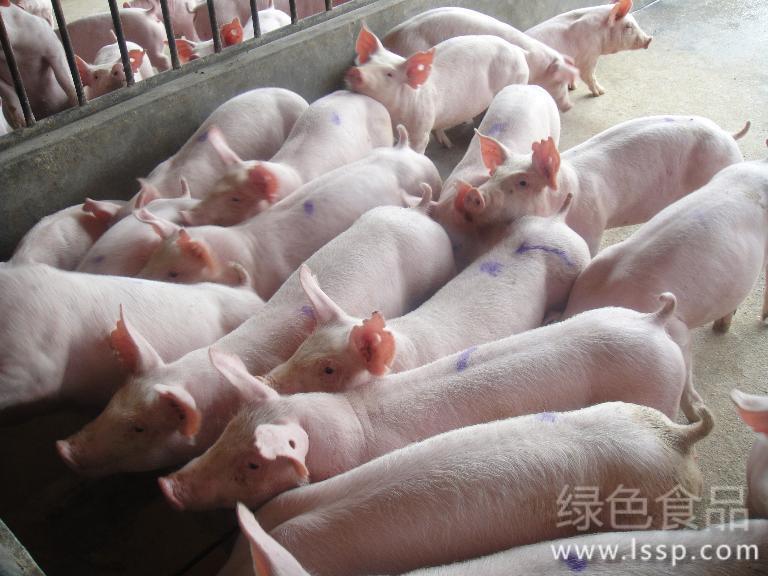
Pig herd
1. Improve the environment. Reducing the proportion of concrete ground on the pig farm can lower ground temperature. Increasing green areas can reduce the temperature by 3°C~4°C and reduce heat radiation by 80%. However, it is not advisable to plant many tall trees that affect ventilation and attract wild birds, which is unfavorable for disease prevention.
2. Scientific feeding. In summer, give the pigs more green feed rich in vitamins and minerals and cooling feed such as fruit peels like watermelon rind; appropriately add salty, umami, or fragrant flavorings to the mixed feed to improve palatability and increase the pigs' feed intake, and do not feed moldy feed. In summer, pigs can be fed 4 times a day to reduce the herd's activity during the hottest periods, feeding once each at 4 a.m., 10 a.m., 4 p.m., and 9 p.m. Keep plenty of cool, clean drinking water in the pigs' troughs. Also give the pigs 0.5% mild saline water once a day to help regulate body temperature.
3. Safe heat prevention. When pigs are above 35°C or at minus 5°C~10°C, their feed intake is low and weight gain is slow. In high-temperature seasons. Corresponding feeding and management should be given according to the pig's category and physiological stage. Boars are fed twice a day, with green feed or thin feed added at noon, and mating and exercise are both carried out in the morning and evening. Every day from 1-3 p.m., spray water once on the pigs' bodies and the ground, and reduce light to 8-10 hours. If the number of matings is low, the amount of concentrated feed should be reduced to prevent overfattening and poor libido.
4. Safe epidemic prevention. In addition to carrying out pig immunization injections according to the immunization program, prevention and control work should also be done well against diseases common in high-temperature herds, such as sow metritis-mastitis-agalactia syndrome, piglet yellow and white scour, coccidiosis, toxoplasmosis, eperythrozoonosis, chlamydia, and other diseases.