How to prevent and treat scabies, which frequently affects meat donkeys in summer
As the economic benefits of raising meat donkeys increase, large-scale meat donkey farming is becoming more and more common, and scabies in meat donkeys continues to occur, especially frequently in summer. Meat donkey scabies is a chronic parasitic skin disease caused by mites invading the skin of meat donkeys. It is contagious, and in large-scale farming, attention should be paid to hygiene, epidemic prevention and prophylaxis.
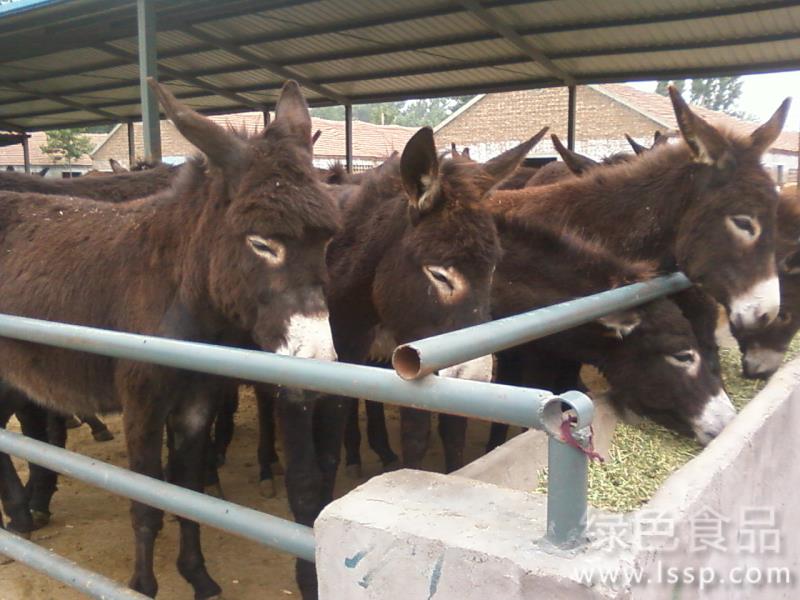
Meat donkey
1. Pathogens of donkey scabies
The most common pathogens of donkey scabies are Sarcoptes scabiei (the burrowing itch mite) and Psoroptes ovis (the sucking itch mite). Sarcoptes scabiei parasitizes the deep layers of the meat donkey's skin, forming burrows. The female mite lays eggs inside the burrows, and under suitable conditions the larvae hatch after 3 to 7 days. After 3 to 4 days the larvae molt into nymphs, and after one more molt the nymphs become adults. Psoroptes ovis parasitizes the surface of the hair-covered skin on the body surface of meat donkeys, where it reproduces and develops.
2. Epidemic characteristics of donkey scabies
Scabies infection is mainly caused by direct contact between healthy meat donkeys and diseased meat donkeys, or by indirect contact through contaminated stables, utensils, saddles and harnesses. In summer, when stables are damp, the body hygiene of donkeys is poor, the hair is long and dense, and the skin surface humidity is relatively high, conditions are most suitable for the development and reproduction of itch mites.
3. Symptoms of donkey scabies
When a meat donkey is affected, the disease first starts on the head, neck and sides of the body, then spreads to the shoulders, back and the whole body. The skin itches, and the animal often rubs against objects or bites and gnaws itself; nodules and vesicles appear on the affected skin, and after they rupture crusts form, the hair falls out, the skin becomes thickened and wrinkled, and the sick donkey gradually becomes emaciated.
4. Diagnosis of donkey scabies
A diagnosis can be confirmed based on the symptoms and epidemic characteristics of meat donkey scabies. When necessary, scrape skin debris from the affected area of the meat donkey and examine it microscopically for the presence of mites.
5. Treatment of donkey scabies
Before treating a meat donkey with the disease, first wash the affected area thoroughly with 2% lysol water and remove the crusts so that the medicinal solution can fully exert its insecticidal effect. Then apply 0.5% to 1% trichlorfon solution to the affected area once a day. At the same time, inject the meat donkey subcutaneously with 1% ivermectin, 2 milliliters per 100 kilograms of body weight. After an interval of 7 to 10 days, give a second injection. When injecting ivermectin, be careful not to exceed the dose by too much, so as to avoid poisoning.
6. In large-scale meat donkey farming, if cases of scabies are found, the sick donkeys should be isolated promptly to prevent transmission and treated promptly, while attention should also be paid to epidemic prevention and timely disinfection. Disinfect the donkey shed with 3% lysol every 10 to 15 days to prevent the occurrence of disease. Brushing the body of meat donkeys several times a day can stimulate the skin and promote blood circulation, enhance body surface activity, and also remove external parasites such as lice and mites.