Key Technical Points for Manual Force-Feeding in Meat Duck Fattening
Force-feeding is a method of artificial compulsory fattening of meat ducks. Fattening begins 10-15 days before market, and the ducks can be marketed once they reach about 2.6 kg. Meat ducks fattened by force-feeding develop "marbled meat," with a layer of fat under the skin; when made into roast duck, the skin is crisp, the meat tender, and the aroma rich. The following is a brief description of the feeding and management methods the author has used in recent years to fatten Beijing ducks, for the reference of duck raisers.
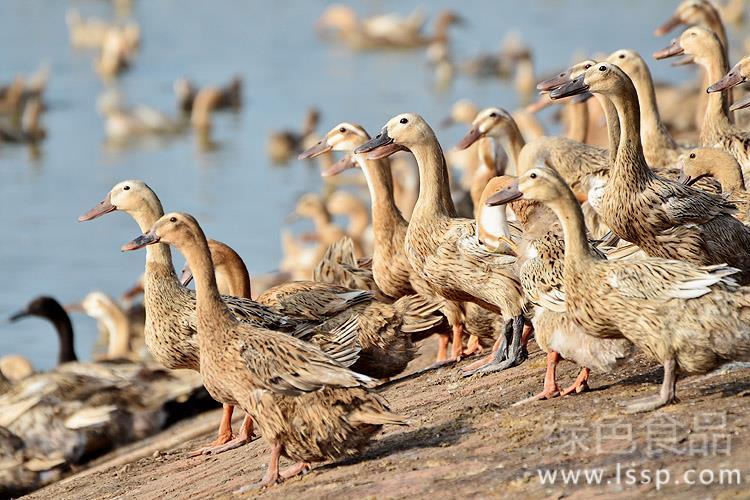
Duck
Select 6-7 week old medium ducks of about 1.75 kg that are strong in constitution, and divide them into groups by size and sex. Generally, male ducks grow faster than female ducks; when force-feeding, group them by body weight and size and control the feed amount for each group to maintain uniformity. To ensure the quality of force-fed ducks, the toenails should be clipped to prevent injury to other ducks. The energy level of the feed used for force-feeding is 11.5-12.5 megajoules/kg metabolizable energy, with 14-15% crude protein. The table below shows a reference feed formula for Beijing force-fed ducks.
The amount of filler feed should be increased gradually according to the age and growth of the meat ducks; never increase it suddenly, to prevent the ducks from being overfed to death or becoming paralyzed from indigestion.
When force-feeding, the requirements are to open the beak quickly, press the tongue steadily, insert the tube accurately, feed slowly, and release the duck quickly. When the feeding operation is done correctly, it is fast and safe. In hot weather and rainy days, the ducks have poor appetite and are prone to indigestion, so reduce the feed or skip feeding. The amount of feed used for force-feeding, calculated as dry powder, is 250-260 grams per duck per day, given in 4 feedings. Generally, a thin mash is used for force-feeding, that is, the mixed feed is mixed with water at half feed and half water into a thick porridge consistency; the feed should be thinner at the beginning and thicker later. To aid digestion, 4 hours before feeding, soak the feed in water, then use a semi-automatic duck force-feeder for feeding. In hot weather, the feed need not be soaked in water first, or only soaked for 1-2 hours, to avoid spoilage. During force-feeding, if a duck has undigested accumulated food in its crop, feed less or do not feed. Because a large amount of feed is given, heat production is also high, so drinking water must be sufficient. Also, because the ducks grow quickly at this time, in addition to sufficient energy and protein, attention should be paid to the ratio of calcium and phosphorus in the diet. After feeding, the ducks should immediately be allowed to bathe, first to help digestion and second to strengthen their constitution, but the bathing pool area should not be too large and the time should not be too long. After force-feeding, the ducks are unwilling to move and lie on the ground for long periods, making the legs prone to paralysis, and the chest is also prone to dead spots or bruising; therefore, every 2-3 hours they should be gently urged to move. Beating with sticks or kicking is strictly prohibited, to prevent piling and crushing deaths. Attention should also be paid to the method of catching ducks: the neck must be held gently, and they must be lifted and set down gently to prevent injury; never throw or fling the ducks, so as to avoid damage and to avoid affecting the quality of the force-fed ducks at market.