Causes of Prolapse and Low Egg Production in Chickens and Methods for Preventing and Treating Fatty Liver
Fatty liver in laying hens, also known as fatty liver syndrome, is a common disorder of fat metabolism in laying hens. This disease mostly occurs in high-yielding laying hens during the peak laying period. The cause is absolute or relative nutrient excess or low absorption function of the body, manifesting as a drop in the flock's laying rate of more than 5%, more prolapse, and poor stress resistance.
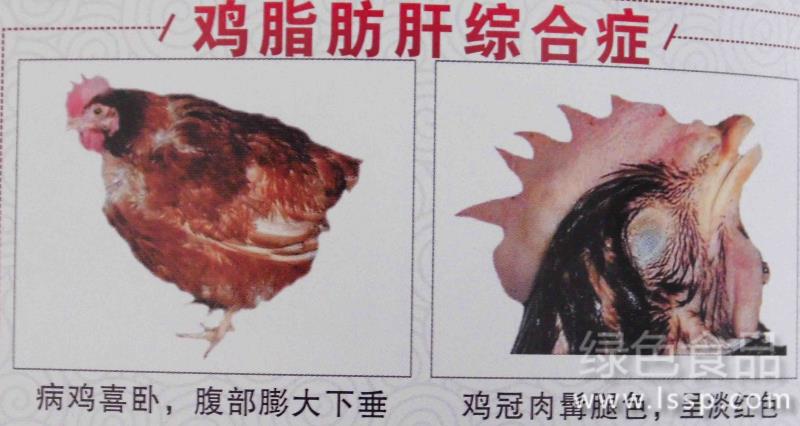
Fatty liver in chickens
1. Treatment methods
(1) Appropriately reduce the energy level of the laying hen feed. Wheat bran can be used to replace 5%-10% of the corn, or vegetable oil rich in linoleic acid can be used to replace the commonly used animal fat and mixed oil in the feed.
(2) Add 600 g/ton of choline chloride, 300 g/ton of methionine, and an appropriate amount of vitamin E and vitamin K3 to the feed, and evenly mix in Chinese herbal medicine for preventing pullorum disease and colibacillosis at a ratio of 0.5%. Add 200 mg of vitamin C per liter of drinking water, and use continuously for 15 days.
(3) For flocks with severe conditions, the feeding amount can be reduced to curb the progression of the disease and protect the flock.
2. Preventive measures
(1) Formulate a scientific feed formula according to the feeding standards for laying hens. Ensure that the nutritional components can meet the health and production needs of laying hens without being excessive; the proportions of all nutritional components should be reasonable, especially the protein-to-energy ratio, because excess energy is the main cause of fatty liver in laying hens.
(2) Carry out disinfection in the presence of laying hens, ventilation, heatstroke prevention and cooling, etc. Keep the temperature inside the chicken house within 28°C and the humidity below 70%. At the same time, do a good job in immunization or drug prevention for diseases such as pullorum disease, colibacillosis, and coccidiosis in laying hens.
(3) Pay attention to protecting the liver function of laying hens so that the synthesis and transport of fat in the liver of laying hens proceed smoothly.
(4) Carefully monitor body weight changes of laying hens during the brooding and rearing periods. When the average body weight of laying hens exceeds the standard body weight by 5%, feed restriction must be carried out immediately. There are two feed restriction methods: First, from the date feed restriction begins, do not increase the feed as the age in days increases until the body weight of the laying hens falls back within the standard range, then begin to gradually increase the feed. Second, from the date feed restriction begins, reduce the feed according to the percentage of excess weight until the body weight of the laying hens falls back within the standard range. The second method has obvious effects and is easy to master, but note that the feed troughs must be sufficient and evenly placed. The entire day's feeding amount can also be given continuously in the morning to prevent scrambling for feed, which would increase differences in body weight among laying hens. If the flock is uneven, it can be divided into a large-body-weight group and a small-body-weight group, and the large-body-weight group should be feed-restricted. In short, within about 20 weeks, raising a healthy, uniform flock with body weight up to standard is the foundation for high yield and high efficiency, and also the foundation for preventing fatty liver in laying hens.