Summer is a time of high incidence for poultry diseases, how should geese flocks be managed?
Summer weather is hot, with high temperatures and frequent rain, and the environment is damp, so pathogens multiply in large numbers; this is a period of high incidence for livestock and poultry diseases. Points to note when raising geese in summer:
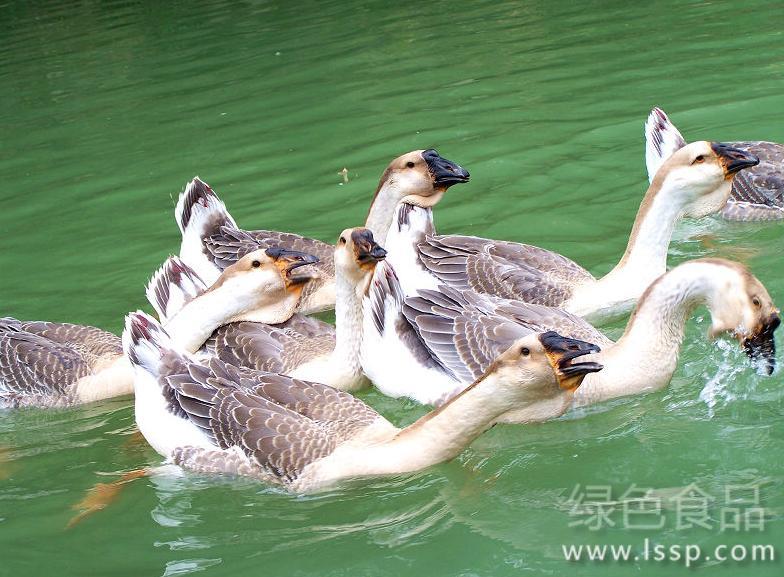
Geese
1. Reduce density:In summer, geese flocks should not be kept at high density. The rearing density for meat geese is 5-6 birds per sq m, to prevent heatstroke in geese caused by crowding.
2. Control humidity:In summer, inside the goose house, not only is the temperature high, but the humidity is also high, so the geese's body heat dissipation is hindered, and pathogens take the opportunity to multiply in large numbers. The relative humidity of the goose house is 55%-60%. If it is greater than 75%, arthritis in goslings increases. To create a more suitable environment for goslings, in summer all doors and windows should be opened day and night to maintain air circulation. If conditions permit, an electric fan can be installed, and the effect of dehumidifying and dissipating heat will be better.
3. Cooling and heatstroke prevention:The suitable temperature in the goose house is below 26°C, and ventilation and air permeability should be maintained. Spread fine sand about 1 cm thick on the ground, and set up a shade canopy over the geese's outdoor activity area for shade. When the weather is hot, spray cool water on the ground of the goose house to lower the temperature, and use cool water to spray a fine mist onto the geese.
4. Combination of confinement and grazing:After goslings hatch, they must be carefully raised and attentively cared for. From the tenth day, begin grazing, and gradually extend the grazing time. After 30 days of age and before the geese's primary wing feathers grow out, make full use of the time periods in summer when the morning and evening temperatures are lower for grazing, and keep them confined at other times, appropriately supplementing with concentrated feed such as bran, rice grain and corn. Add appropriately more VC to the drinking water to resist heat stress.
5. Epidemic prevention and disease elimination:. For newly hatched goslings, inject each goose intramuscularly with 0.02% ml of antiserum vaccine to prevent goose plague. At around 30 days of age, inject each goose intramuscularly with 1.5 ml of fowl cholera vaccine. Feeding utensils should be disinfected once every 3 days to 5 days with 5% fresh lime water. The goose house and activity area should be disinfected once every 7 days to 10 days with 1% bleaching powder solution.