Summer is the golden season for fish farming, how to do a good job in fish pond management
Summer is the golden season for fish farming, so fish pond management is especially important. In summer, water temperature is relatively high, bacteria multiply faster, and fish grow and metabolize quickly, so the incidence of disease increases and spread is enhanced. Therefore, summer fish pond management needs to start from the following five aspects.
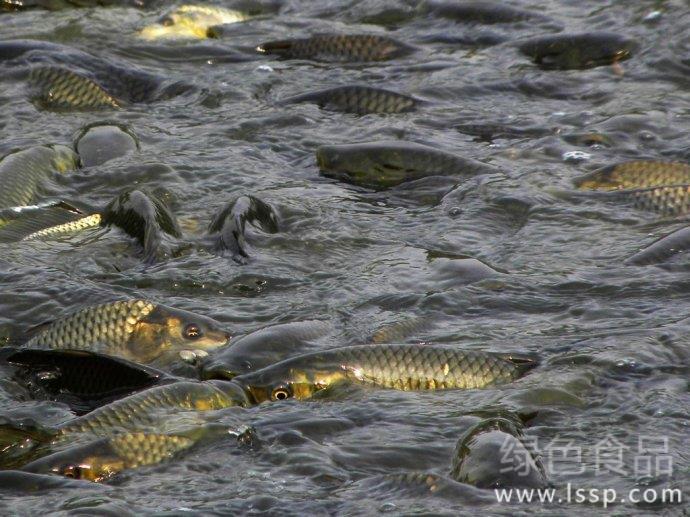
Fish pond
I. Fertilization
In summer, fish grow vigorously and consume a lot of oxygen, so the amount of bait fed is also large. In summer, the use of organic fertilizer is not advocated; inorganic fertilizer should be used to reduce pollution. The specific amount of fertilizer applied is determined according to the fertility of the pond water, water quality conditions, weather conditions, and so on. Generally, the water transparency of a fish pond should be maintained at about 25cm, and the water color is best when it is tea-brown, green-brown, yellow-green, or oil-green. The time for fertilizing should be chosen on a sunny morning, and it should be splashed evenly over the whole pond. Because the nitrogen content in fish ponds increases in summer, water-soluble phosphate fertilizer is chosen for fertilization. Generally, calcium superphosphate is applied 2~3 times per month, with 5~6 kg per mu each time. Usually, 3~5 days after applying phosphate fertilizer, the phytoplankton in the fish pond will peak and the ammonia nitrogen content will decrease. At this time, according to water quality management requirements, appropriately add new water to prevent the water color from becoming too dense.
II. Regulating water quality
Regularly adding new water can bring in oxygen and nutrient salts such as iron, manganese, and silicon that the fish pond lacks, and can also dilute organic matter and toxic substances, restoring the balance of the fish pond's composition. Generally, a fish pond should be replenished with new water 3-4 times per month, about 30cm each time.
III. Feeding
In summer, feeding to about 80% full is best. If too much is put in, because the water temperature is relatively high, leftover bait accelerates water quality deterioration, and pathogenic bacteria multiply in large numbers, causing various fish diseases. If fish eat too much, they are also prone to enteritis. The specific feeding amount should be flexibly controlled according to the weather, water temperature, water quality, and the feeding situation of the fish.
Fish pond
IV. Preventing floating head
Patrol the pond frequently. Around dawn, check whether there is floating head; in the afternoon, observe the feeding situation of the fish; at sunset, check the fish's food intake throughout the day and whether there are signs of floating head. To prevent floating head, maintain good water quality. Reduce fish storage density. For fish ponds with severe floating head, promptly catch part of the fish for market. If the pond water is too dense and plankton is excessive, kill part of it to reduce dissolved oxygen consumption. Methods to rescue fish with floating head:
1. Add new water to increase oxygen content. 2. Turn on the aerator and stop feeding and fertilizing. 3. Use 10 kg of yellow mud plus 20 kg of salt per mu, mix with water and splash over the whole pond, or 2.5 kg of quicklime powder, mix with water into a slurry, and sprinkle over the whole pond for emergency rescue.
V. Fish disease prevention and control.
Summer is a period of high incidence of fish diseases, so work on preventing and controlling fish diseases must be done well.
1. Disinfection: early-stage disinfection of fish ponds, disinfection before stocking, disinfection of fish fry, and disinfection of water bodies.
2. During activities such as catching, transporting, and stocking, operate carefully to prevent fish from being injured.
3. When fish diseases are found, treat them promptly according to the symptoms. The order of medication must be correct: first kill parasites, then sterilize.