Pollution-free food is in high demand: how to raise pollution-free grass carp
In recent years, concepts such as pollution-free, green, organic and original ecology have taken root in people's minds, and eating healthy food has become a public demand. Grass carp, as one of the four major Chinese carps, accounts for a relatively large proportion of fish farming. To raise grass carp well, fish farmers should pay attention to the following three points, control every link well, and ensure that grass carp is a green food.
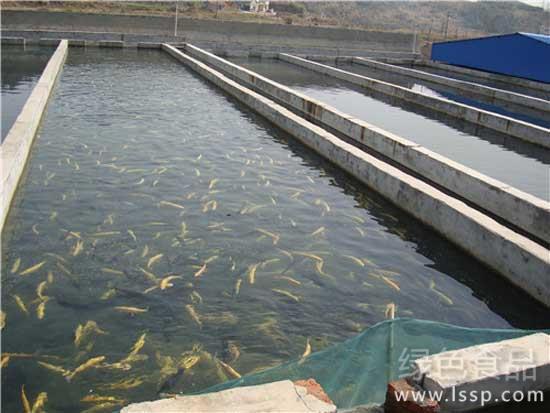
Grass carp farming
I. Ecological environment
To farm pollution-free grass carp, there should be a dedicated fish farming base of a certain scale, and around the base there should be no pollution sources such as industrial three wastes, agricultural waste, pesticides, domestic sewage and various kinds of garbage. The farming base should have sufficient water sources, good water quality that meets the "Pollution-free Food Freshwater Aquaculture Water Quality Standard", smooth water intake and drainage, no interconnection between fish ponds, convenient transportation, rich feed resources and a good ecological environment. A fish pond of 5-10 mu is best, oriented east-west, with a water depth maintained at about 2 m. Excess sludge in the pond should be removed. After the pond is exposed to the sun in winter, 10 days before stocking fry, fill with 10-20 cm of water, and use 150 kg of quicklime per mu of fish pond for thorough pond clearing and disinfection. After 2-4 days, drain the water, fill the fish pond with filtered water, and apply disinfected manure, so as to prevent diseases and harmful organisms from flowing into the fish pond with the water.
II. Fry stocking
To raise grass carp well, healthy, lively and high-quality grass carp fry must be selected. Before the fry are put in, they should be disinfected; options include 20-40 mg per liter of chlorine dioxide for 5-10 minutes; 1-3% table salt for 10-15 minutes; 10-20 mg per liter of potassium permanganate for 5-10 minutes. Before early March, the grass carp fry are put into the pond. For ponds with good conditions, stock 250-300 large-size grass carp per mu at 300-500 g each; grass carp fry below 200 g each can be stocked at 500 per mu. If the fish pond density is too high or there is no clean flowing water, prepare aerators, and stock fry at a polyculture ratio of 80:20, that is, 80% main culture of grass carp, and 20% secondary culture fish (200 silver carp, 50 bighead carp, 80 common carp, etc., with secondary culture fish smaller than grass carp). In addition, a small number of crucian carp can be added to make full use of the water space and residual bait and improve farming efficiency.
Water quality regulation: water quality is crucial for raising grass carp, and the water must be kept fresh and hygienic. It is required to keep the pond water fertile, tender, refreshing and lively. Every 3-5 days, add 5-10 cm of new water to increase water vitality, increase dissolved oxygen, enhance the reproduction of plankton in the grass carp pond, meet the feed needs of silver carp and bighead carp, and stimulate the growth of grass carp. Use aerators to increase oxygen, keep water quality fresh and dissolved oxygen normal. At the same time, every half month, splash 10-20 kg of quicklime per mu. Transparency is best kept at 25-30 cm, dissolved oxygen at 3-5 mg/liter, and pH at 7.5-8.0.
III. Feed feeding
Green feed should be the main feed, and pellet feed should be given for the insufficient part. Feed should be given according to the principles of four fixed points and four observations, generally 3 times a day: 8-9 am, 3-4 pm, and in the evening; green feed is fed in the evening. The daily feeding amount should be based on grass carp finishing eating within 30 minutes each time; the amount of green feed should be 30-50% of the grass carp's body weight, finished within 2 hours. The specific feeding amount should be increased or decreased according to the season, weather, water temperature and the feeding situation of the grass carp, and it is best for the grass carp to eat until 80% full.