How to apply foliar fertilizer when growing vegetables?
How to apply foliar fertilizer when growing vegetables? Please introduce the method: spray an aqueous solution of the nutrients the plants need onto the leaves, so that the plants directly absorb the effective nutrients through the leaves. This technique is called vegetable foliar fertilization. Compared with soil fertilization, this technique has faster conversion, higher fertilizer utilization, and improves the roots'...
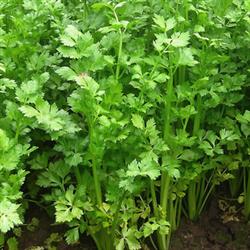
How to apply foliar fertilizer when growing vegetables? Please introduce the method
Spray an aqueous solution of the nutrients the plants need onto the leaves, so that the plants directly absorb the effective nutrients through the leaves. This technique is called vegetable foliar fertilization. Compared with soil fertilization, this technique has advantages such as faster conversion, higher fertilizer utilization, and improved absorption of nutrients by the roots. Foliar fertilizers can be broadly divided into macroelement fertilizers, micronutrient fertilizers, organic fertilizers, microbial fertilizers, or photosynthesis enhancers or pesticide foliar fertilizers, and so on. Those commonly used in production include urea, potassium sulfate, superphosphate, ammonium nitrate, photosynthetic micronutrient fertilizers, and many others. The following points should be noted when applying them:
1. It should be carried out on the basis of applying sufficient base fertilizer and timely topdressing;
2. Select the appropriate foliar fertilizer type according to the vegetable variety, growth and development stage, growth condition, and fertilization goal;
3. The concentration of the liquid fertilizer must be reasonable;
4. Choose dusk or an overcast day for spraying;
5. Pay special attention to spraying evenly the vigorously growing leaves and the undersides of the leaves.
For example, for greenhouse cucumbers, eggplants, peppers, celery, Chinese chives, and many other vegetables, the solid multi-element compound foliar fertilizer "Gaole", which has added disease-prevention and treatment agents and is inexpensive, effective, and clearly increases yield, can be sprayed; for greenhouse cucumbers in the fruiting stage, spraying a sugar-nitrogen solution of 0.2% urea plus 0.2% potassium dihydrogen phosphate plus 1% sucrose not only increases yield and resists disease, but also reduces damage from downy mildew; applying photosynthetic micronutrient fertilizers and light absorption inhibitors and spraying tomatoes, cucumbers, peppers, common beans, celery, Chinese cabbage, cabbage, lettuce, cauliflower, etc. all give very good results.
Click to get more vegetable growing techniques
Click to get more foliar fertilizer application methods
Click to get more fertilizer application methods