How effective is foliar fertilization? A detailed explanation of the correct application methods
How effective is foliar fertilization? How should it be applied properly? Please explain: the practice of spraying a fertilizer solution so that plants absorb nutrient elements through their leaves is called foliar fertilization, and fertilizers intended for foliar absorption, which apply the nutrients crops need directly to the leaf surface, are called foliar fertilizers. In recent years, with the development of fertilization technology...
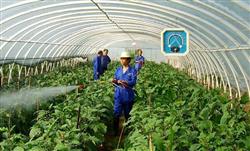
How effective is foliar fertilization? How should it be applied properly? Please explain
The practice of spraying a fertilizer solution so that plants absorb nutrient elements through their leaves is called foliar fertilization, and fertilizers intended for foliar absorption, which apply the nutrients crops need directly to the leaf surface, are called foliar fertilizers. In recent years, with the development of fertilization technology, foliar fertilization, as a fertilization measure that strengthens crop nutrition and prevents certain nutrient deficiency symptoms, has been rapidly promoted and applied. Practice has proven that foliar fertilization is one of the fertilization techniques with rapid fertilizer efficiency, high fertilizer utilization rate and low dosage.
Foliar fertilization allows nutrients to enter the plant body directly from the leaves and take part in the crop's metabolism and the synthesis of organic matter, so it is more rapid and effective than soil fertilization. Therefore, it is often used as an effective measure for promptly treating crop nutrient deficiency disorders. When fertilizing, you can also carry out spraying and supplementary application by stages according to each growth stage of the crop, the condition of the seedlings and the actual nutrient supply status of the soil, giving full play to the rapid response of foliar fertilizers, so as to ensure that the crop grows and develops normally under suitable fertilizer and water conditions and achieve the goal of high yield and good quality. But only by correctly applying foliar fertilization techniques can the yield-increasing and income-increasing effects of foliar fertilizers be fully brought into play. Therefore, the issues to pay attention to when using foliar fertilization are:
Choose an appropriate spraying concentration: The concentration of foliar fertilization is directly related to the spraying effect. If the solution concentration is too high, it is likely to burn the crop leaves after spraying; if the solution concentration is too low, it not only increases the workload but also fails to meet the requirement of supplementing crop nutrition. Therefore, in application, the formulation should be prepared according to the fertilizer, the crop, and local conditions.
Choose an appropriate spraying method: Prepare the solution evenly, make the spray droplets uniform and fine, and determine the number of sprayings according to need.
Master the spraying period well. When carrying out foliar fertilization, you should, according to the nutrient element requirements of various crops at different growth and development stages, choose to spray when the crop's demand for nutrient elements is greatest and most urgent, so as to achieve the best effect.
Choose an appropriate spraying time: The effectiveness of foliar fertilization is directly related to temperature, humidity, wind and so on. For foliar spraying, it is best to choose a windless day, a cloudy day, or before 9 a.m. when humidity is relatively high and evaporation is low; the most suitable time is after 4 p.m. If it rains 3~4 hours after spraying, a supplementary spraying is needed.
Choose appropriate spraying parts: Because the leaves and stems of the upper, middle and lower parts of the plant differ in metabolic activity, their ability to absorb external nutrients differs greatly, so appropriate spraying parts should be selected.
Add adjuvants: When spraying fertilizer solution on the leaves, appropriately add adjuvants to improve the adhesion of the fertilizer solution on the plant leaves and promote the absorption of the fertilizer.
Combine with soil fertilization: Because the roots have a larger and more complete absorption system than the leaves, for nutrient elements needed in large amounts such as nitrogen, phosphorus and potassium, measurements show that more than 10 foliar fertilizations are needed to reach the total amount of nutrients absorbed by the roots. Therefore, foliar fertilization cannot completely replace root fertilization of crops and must be combined with root fertilization.
Click to get more foliar fertilizer application methods
Click to get more fertilizer application methods