How to Raise Newly Hatched Squabs That Are Weak and Prone to Death
Squabs are pigeons from hatching to 28 days of age. The parent pigeons will blow air toward the squab with their beaks 2 hours after hatching and secrete crop milk; after another 2 hours, the parent pigeons feed the squab crop milk. At this time the squab is weak and prone to death, so management must be strengthened.
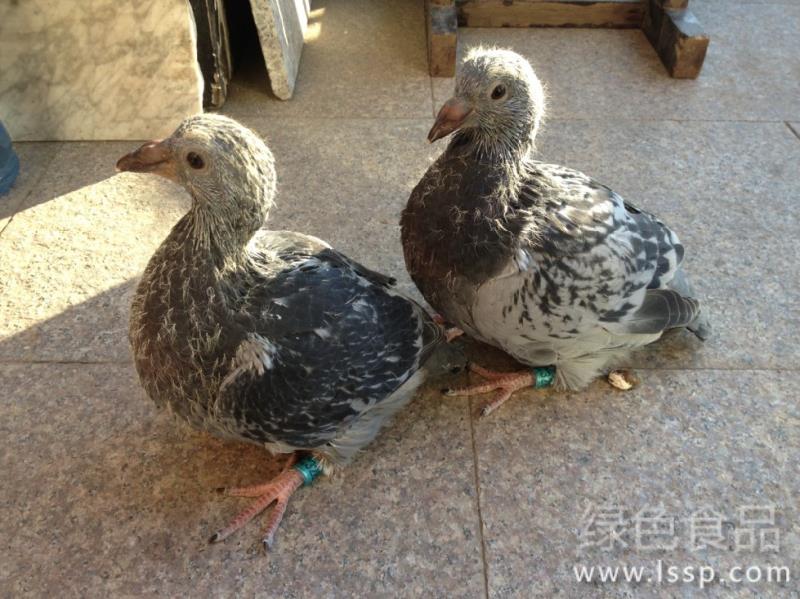
Squab
First, observe carefully to prevent the squab from being trampled or frozen to death by the breeder pigeons. If it still cannot get crop milk 5 to 6 hours after birth, promptly investigate the cause and, if necessary, feed it by hand. When the parent pigeons do not nurse, the squab can be fostered to breeder pigeons of the same period, which can avoid some parent pigeons feeding only a single squab and improve production capacity.
After 3 to 4 days of age, the squab's eyes open, its body gradually becomes stronger, it begins to grow feathers, its food intake increases, and its digestion strengthens. At this time the parent pigeons feed the squab frequently, as many as more than ten times a day, so the feed supplied to the parent pigeons should be rich in nutrients and sufficient to meet the need. At this time the squab's droppings increase, easily contaminating the nest; the lining cloth and bedding straw should be changed daily to prevent disease.
When the squab is 10 days old, more feathers have grown and it can move around on its own. The brooding time of the squab shortens, and the food changes from crop milk to semi-granular feed. A few squabs fail to adapt and will suffer indigestion and inflammation of the crop. At this time, yeast tablets or stomachic medicine should be given promptly to help digestion.
When the squab is 15 days old, its feathers are basically fully grown and it moves freely. It can be taken out of the nest, and a piece of cloth 20 cm × 20 cm should be spread inside the cage to let it gradually adapt, so that it will not sprain its feet. At this time the parent pigeons' feed is granular, the same as the feed they eat, and most parent pigeons begin laying eggs again and have no interest in feeding the squab, so artificial feeding should be carried out during this period.
After the squab is 20 days old, its feathers are full and it can move about everywhere, but it cannot yet peck food entirely on its own and still relies on the parent pigeons; however, it can actively beg for food, and at this time the parent pigeons will force the squab to feed independently. At this time management should be strengthened and the supply of high-protein feed increased to meet the squab's needs.
When the squab grows to 25 to 28 days of age, its body weight can reach 500 to 750 grams, and it can be sold.