Autumn breeding of domestic rabbits is in season: technical measures for autumn breeding of quality breeding rabbits
Autumn is dry, feed is plentiful and nutritionally rich, making it suitable for breeding quality rabbits. To do a good job of autumn breeding of quality rabbits, the following technical measures can be taken:
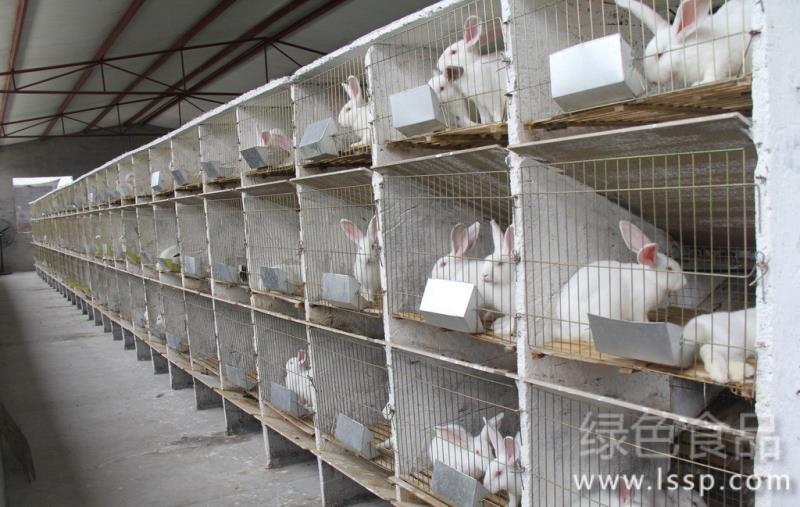
Rabbit farming
1. Improve the environment and manage carefully:
After the beginning of autumn, strengthen ventilation in the rabbit shed and keep the shed clean and quiet. If a three-tier cage system is used, breeding bucks should be kept in the lowest tier of cages, because the temperature in the lower cages is lower than in the upper ones; breeding bucks can also be kept in a semi-basement. When a breeding buck is exposed to high temperatures, its testes shrink by 60%, and after the temperature drops it still takes 45 days to recover, whereas does recover for mating in about 7 days. This method helps maintain good semen quality in bucks and can increase the number of kits by at least 1-2 litters.
2. Adjust the feed and speed up regaining body condition:
In autumn, mornings and evenings are cool and rabbits' appetite increases. Feed mixed concentrate in the morning and evening, with the evening concentrate amounting to 65% of the daily ration, and provide clean drinking water; at other times, feed high-quality green and coarse fodder. After body condition is restored, feed more protein-rich feed such as soybeans, wheat bran, fish meal, sprouted barley, silkworm pupa powder, etc. The mixed concentrate should contain 2900 kcal/kg digestible energy, 18%% crude protein, and 10% crude fiber, plus 1% salt and 2% bone meal or flour.
3. Seize the time for mating:
After the start of autumn breeding, grasp the doe's estrus period (does come into estrus once every 7-15 days, each time lasting 3-4 days) and mate them at the right time. When a doe is in estrus, her vulva is red and swollen, mucus flows from the vagina, she makes a “cooing” sound and runs around restlessly. At this time, grasp the mating timing of “pink is too early, purple-red is too late, bright red is just right”, that is, mate when the doe's vulva is bright red, which can increase the conception rate; double mating can also be carried out (using 2 bucks successively in the same estrus period, or mating again with the same buck after 8 hours).
4. Artificial induction of estrus:
Commonly used methods: drug-induced estrus, teasing-induced estrus, pheromone-induced estrus, etc. For drug-induced estrus, inject 50-100 units of chorionic gonadotropin into the inner thigh muscle of the doe and mate 4-6 hours after injection. Teasing-induced estrus is to put the doe into the buck's cage and let the buck chase and mount her to stimulate estrus; generally induce estrus in the morning and mate in the afternoon. For pheromone-induced estrus, put the doe into the buck's cage and let the buck chase and mount her; after a period of time, take the buck out and let the doe stay overnight in the cage. Because the doe fully takes in the buck's scent in the buck's cage, the next day the doe shows signs of estrus, and mating can then be carried out.
5. Frozen semen and earlier mating:
The sexual function of bucks is greatly affected by high temperatures, and the conception rate of natural mating is low. After the beginning of autumn, artificial insemination with frozen semen can increase the conception rate. Before insemination, inject 50-100 units of chorionic gonadotropin intramuscularly into each doe. Inseminate 4-6 hours after injection, with an insemination volume of 0.3-0.5 ml.