Managing water quality well during the autumn breeding and molting period of oriental river prawns means bigger prawns and higher profits
Autumn management of prawn ponds is especially important for commercial prawn farming. Doing a good job of autumn pond management can raise the commercial rate of oriental river prawns, increase the size of commercial prawns, and boost prawn farming profits.
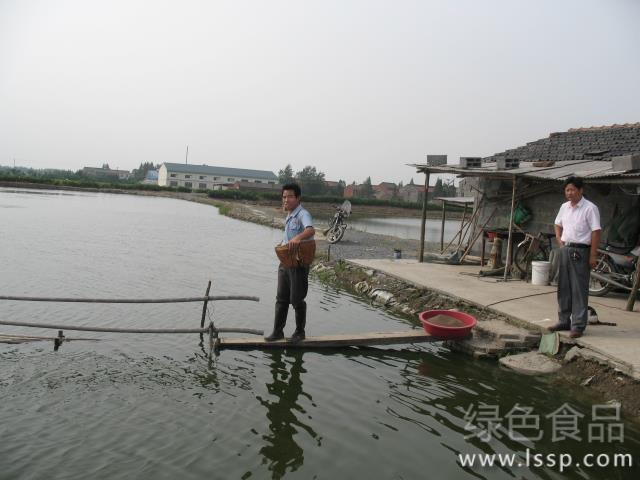
Oriental river prawn farming
I. Control autumn breeding of prawn fry.Controlling autumn breeding of prawn fry can raise the commercial rate of oriental river prawns. Oriental river prawns grow fast; fry hatched in late June, after 50-60 days of rearing, can reach a body length of more than 3.5cm and become sexually mature by August. How do you control autumn breeding of fry? Pond water transparency needs to be above 35cm, with the water on the clear and lean side, preferably yellow-green. In this way, because autumn-bred fry lack sufficient plankton as food, their survival rate is greatly reduced.
II. Manage pond water quality well.In autumn prawn ponds, maintain a high water level, and change water promptly according to the pond water color and transparency. If the pond water is too fertile, first discharge part of the "old water" and then add new water. Filter the incoming water with double-layer 60-mesh silk gauze to prevent wild fish from mixing in. Each water change should be about 25-30cm, and as far as possible do not inject old water from fish ponds into prawn ponds, otherwise it easily causes floating head. If there are many wild trash fish in the prawn pond, you can splash a prawn and crab protectant to kill them. During the farming process, because of feeding and fertilizing, the pond water easily becomes fertile and thick, so test the pond water pH frequently and adjust it promptly. Spread quicklime once a month; depending on the pond water pH, for each mu of pond with a water depth of 1 m, the quicklime dosage is 10-15 kg, which has a significant effect on disease prevention and growth. In addition, polyculturing filter-feeding and a small number of herbivorous fish in the oriental river prawn pond can control excessive algae growth, keep the water fresh, and create a good environment for oriental river prawn farming. If there is a rainstorm before evening, hypoxia is very likely in the early morning of the next day, so guard against it promptly.
III. Strengthen molting management.Newly molted soft-shell prawns have weak activity and are unable to resist enemies. Therefore, in addition to creating a good environment for oriental river prawns and providing them with hiding places, you should also avoid large-scale flushing during the molting period of oriental river prawns, which causes mass death of molting prawns. At the same time, ensure sufficient feed or add molting hormone to the bait so they molt smoothly and avoid cannibalism among the same species.
IV. Promptly control blue-green algae.If large amounts of blue-green algae are found in the prawn pond, the following methods can be used:
(1) Water change: repeatedly fill and drain, each time taking in 20-30cm of water and discharging an equal amount of bottom water, to reduce the organic matter content.
(2) Dry the shoals: on sunny days, appropriately lower the water level to let the algae attached to the pond shoals die from sun exposure.
(3) At noon on sunny days, spread plant ash at the downwind outlet of the pond to block algal photosynthesis.