Feeding techniques to reduce disease resistance decline and high morbidity in lambs after weaning
Lambs should first be fed a pre-feeding period diet for about 10 days, then fed a silage-type fattening feed. At the beginning, appropriately control the feeding amount, increasing it daily, and reach the full feeding amount in about 7 days. The mixing operation should strictly follow the diet formula, and the mixing must be uniform, especially the indispensable limestone powder. The daily intake of lambs is above 2.5kg, and the feed must be weighed, not estimated by weight.
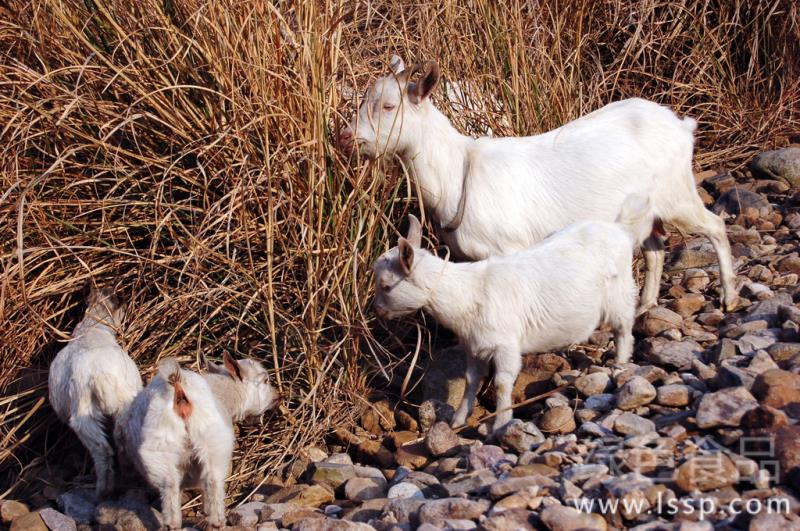
Lamb
Young lambs have a high feed conversion rate, and early weaning for fattening results in low input, high output, and simple methods. Lambs are weaned at 2 to 3 months of age. The weaned lambs are transferred to fattening pens. If conditions permit, the ewes can be removed, and the lambs can be kept in the original pen for 15 to 20 days before being transferred to the fattening pens.
When transferring to the fattening pens, it is best to do so at night, so that the lambs experience less stress. They should be grouped according to body size, fatness, and strength for ease of management.
The lambs are grouped and transferred to the fattening pens, and after continuing to feed the original forage and feed for seven days, the lambs with good breeding performance are selected to be kept for breeding and transferred to the reserve flock for rearing. The remaining lambs are prepared for fattening, and gradually switched to fattening feed, with a transition period of 10 to 14 days, after which the feed is completely changed to fattening feed.
At this time, the sheep lambs should be sheared. Shearing should be done on a sunny day. After shearing, deworm once 3 to 5 days later, and deworm again 7 to 10 days later.