For commercial broiler chicken farming, density, temperature and feed feeding methods are key
For commercial broilers, preparation before chick arrival is very important, and an all-in, all-out model should be considered. After the broilers are sent to market, the chicken house must be disinfected, and residual manure removed in time. After cleaning the chicken house, spray 2~3 times with 3% sodium hydroxide solution and 0.4~0.5% Weili Mie solution. After disinfection, leave the chicken house empty for more than one week. If air circulation is poor, this can be extended appropriately; if there is residual manure, chicken feathers and the like around the chicken house, these should also be cleaned up in time, and after cleaning, disinfect with lime powder. Two days before the chicks arrive, raise the chicken house temperature to about 33°C to ensure the brooding room temperature.
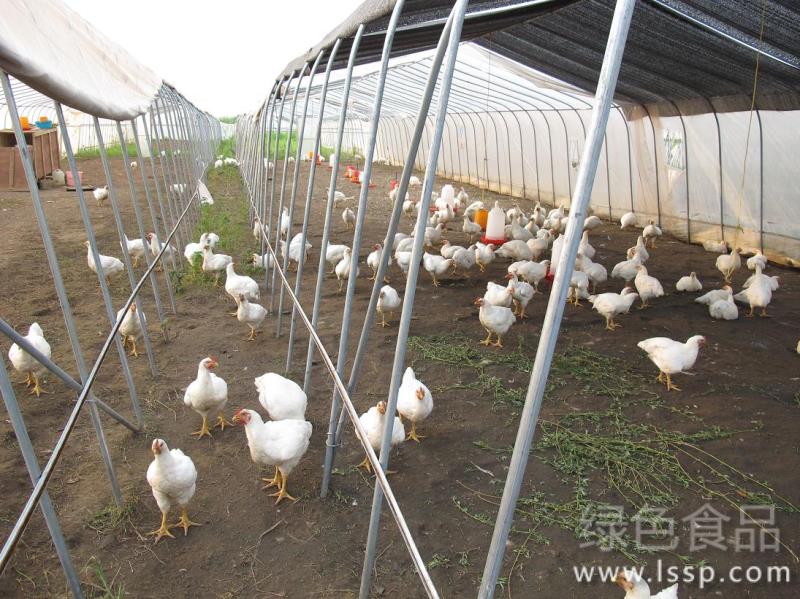
Broiler
Feeding key points:
Control stocking density. Most commercial broiler chicks are raised on wire floors, and some are raised on the ground in free range. When entering the brooding room, chick density must be strictly controlled. Too high a density easily causes crowding and uneven feed intake, affecting chick growth; too low a density wastes facilities and is not conducive to heat preservation. Farmers should control density according to the rearing space.
Temperature and humidity regulation. The temperature and humidity of the chicken house also greatly affect the growth rate of commercial broiler chicks. During chicken growth, ventilation must be strengthened to control temperature and humidity. If the temperature is suitable, the chicks sleep quietly, are evenly distributed, and have a good appetite; if the temperature is low, they huddle and chirp; if the temperature is high, they drink frequently. Chicken house temperature and ventilation interact with and influence each other, so ventilation is crucial. In winter, when the weather is clear at noon every day, ventilate the chicken house for 10~20 minutes, which can ensure the chicken house temperature is not affected; in hot summer, increase the ventilation time. The relative humidity in the brooding room is high early and low later; in the early stage, 60%~70% is more suitable; after 10 days of age, maintain 50%~60%; too high humidity easily causes coccidiosis.
Feed as early as possible. Commercial broilers grow quickly. To let the chicks' digestive organs and immune system mature as soon as possible, the chicks should eat as early as possible and obtain nutrients through feed in the digestive tract. After hatching, chicks need an adaptation process to obtain nutrients from feed. After hatching, chicks still have 4~7 grams of yolk in the body, which serves as the only nutritional supplement before eating and before adapting to the digestive tract. However, the yolk provides nutrients for only a limited time. If the chicks cannot adapt to nutrients in feed as soon as possible, their later growth will be affected. Therefore, when the chicks enter the brooding room, they should be fed and given water in time.
Feed feeding methods. Commercial broilers require different nutrient compositions and particle sizes of feed at different stages. As commercial broilers, the discomfort shown during feed changes is very obvious, with indigestion and greenish chicken manure; in severe cases, it causes feed waste and disease. Therefore, when changing feed, it should be changed gradually so the chicks have an adaptation process. If a disease is triggered by negligence, promptly administer drugs such as Jianwei Xiaoshi San and Pingwei San for control, to avoid unnecessary stress.