Five measures to note in dairy cattle farming: do a good job in breed selection, feeding and hygiene
1. Raise high-yielding dairy cows. Selecting and raising quality dairy cows is the key to success; although the cost of introducing stock is high, the benefits from future milk production and calves will fully make up for it. In terms of appearance, a quality dairy cow is large in size, angular, with a refined appearance, a long middle body, a back and loin that do not sag, a broad and deep chest and abdomen, a large but not drooping abdominal girth, firm limbs and hooves, a well-developed udder with good attachment, deep milk wells, four evenly sized quarters, moderate teats, no supernumerary teats, a soft udder during the dry period, and during lactation a udder with thick, crooked superficial veins, full overall but not drooping. If conditions permit, one should also examine the milk production record of its mother and the quality of its father.
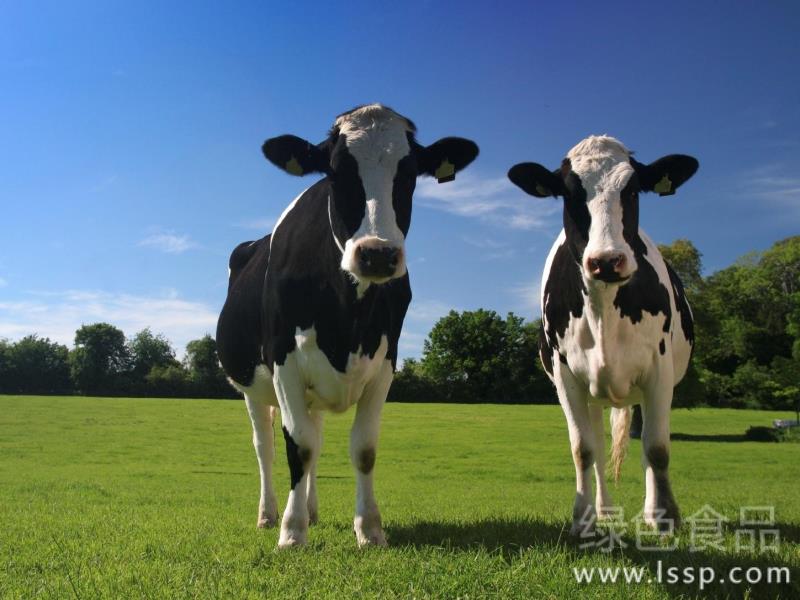
Dairy cow
2. Master the techniques and feed carefully. Master the theory and techniques of dairy cattle farming, consult experienced people, and become familiar with the production stages of dairy cows, especially breeding, milking, and prevention and treatment of common diseases. Feeding must be careful; if feeding cannot keep up, even the best dairy cow will not produce much milk. Management priorities: 1. Barn management. The barn should have good lighting and ventilation, and be cleaned every day; in winter, tie the dairy cows outdoors so they get more sunlight, and in summer tie them in a cool place. 2. Feeding management. Supply green fodder in sufficient quantity, with the aim that they eat their fill without leftovers; use roughage as a supplement, adding it in small amounts; provide concentrate according to milk yield; for high-yielding dairy cows, feed 1 kg of concentrate for every 3 kg of milk produced; feed at fixed times each day, and be careful not to feed moldy feed or let them drink ice water or dirty water. 3. Control of the dry period. At about 10 months of milk production, gradually dry off the cow, because the fetus is already about 7 months old and the dairy cow's consumption is very great; drying off helps the dairy cow rest and adjust, preparing for the next lactation period.
3. Pay attention to hygiene. Milk can be drunk directly or used for further processing, so hygiene must be ensured, and no filth may get mixed in. Before each milking and after each milk sale, the milk bucket and milking machine must be cleaned; the rear part of the dairy cow must be brushed clean, the udder washed clean, and the first handful of milk drawn should be discarded; after milking, put the lid on the bucket properly and sell the milk (send it to the purchasing station) as soon as possible. If a dairy cow has mastitis or is during medication, the milk drawn cannot be drunk.
4. Proceed step by step. Raising dairy cows involves a heavy workload, requires strong labor, and has high technical requirements for feeding. Therefore, when just starting to raise dairy cows, the scale should not be large; after gaining experience, gradually expand, otherwise, with a lack of labor, lack of experience, and poor management, it will be difficult to achieve high efficiency.
5. Be honest. Cattle farmers should be honest: the fresh milk sold must be hygienic, of good quality, and not adulterated or counterfeit. Milk purchasing stations should be honest: they should pay milk payments promptly and set a reasonable milk purchase price, so that cattle farmers can make a profit and both sides benefit. In the past two years, many farming households that wanted to raise dairy cows have not dared to do so, afraid that raising them would be wasted effort, because some milk purchasing stations, having no local competitors, keep milk prices low and delay milk payments. Therefore, cattle farmers should cooperate with milk purchasing stations that are honest and trustworthy.