Postpartum fever in sows is common in summer and autumn; here is how to prevent and treat it when the sow prefers lying down, eats little, trembles and produces less milk
Postpartum fever in sows tends to occur during the high-temperature period in summer and autumn. Sows 1—3 days after farrowing develop high fever caused by uterine infection, which is called postpartum fever. Clinical symptoms are: elevated body temperature of 40.5—41.5℃, preferring to lie down, reduced appetite or no eating, body trembling, accelerated breathing, reduced milk production, and thick discharge from the vulva.
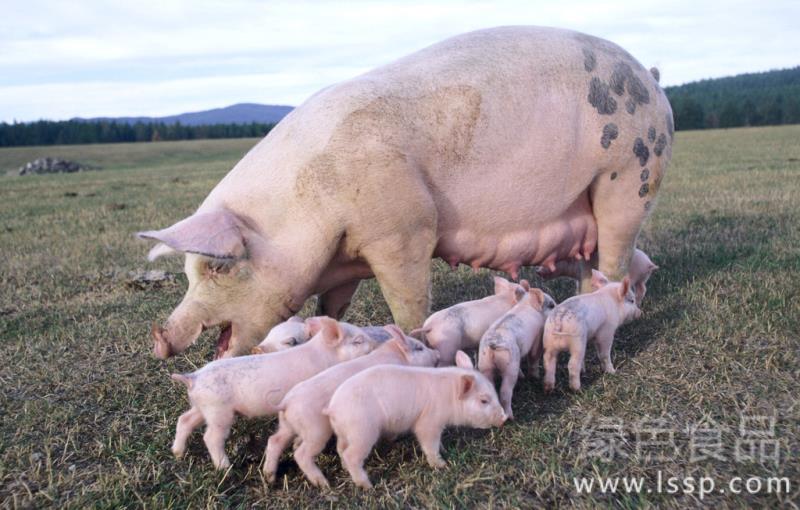
Sow
Postpartum fever in sows is often caused by insufficient disinfection during assisted farrowing. During farrowing, if the fetus is too large and injures the birth canal, or if the person assisting farrowing does not disinfect their arms and inserts them into the birth canal to feel around, postpartum fever can result. This is especially so in stuffy, hot weather with poor ventilation in the shed, when the postpartum sow's body heat rises, heat dissipation is difficult, and the chance of bacterial infection increases, making postpartum fever more likely.
Treatment: Treatment should be started early, and according to body temperature, appetite, spirit and other conditions, cases should be divided into mild and severe and treated accordingly. Mild cases: body temperature about 40.5℃, no eating, spirit still fair. Intramuscular injection of a mixture of 1.2 million units of penicillin and 1.5 grams of streptomycin, twice a day, for 2—3 consecutive days; intramuscular injection of 20—40 units of pituitrin, once or twice a day, for 2—3 consecutive days. Severe cases: sow body temperature above 41℃, depressed spirit, preferring to lie down, no eating, shivering, and relatively more lochia. Use 10—20% caffeine sodium benzoate 10 mL by subcutaneous injection; tetracycline hydrochloride 1—1.5 grams dissolved in 500 mL of 5% glucose saline for a single intravenous injection; intramuscular injection of 20—40 units of pituitrin. The above three medicines are given once or twice a day for 2—3 consecutive days.
Prevention: 1. Seven days before farrowing, thoroughly disinfect the farrowing shed and tools with 2% caustic soda solution or formaldehyde solution. 2. Before farrowing, the sow should gradually have its feed reduced, and should not be fed for the meal immediately before farrowing, to help smooth delivery. 3. Before and after farrowing, wash the vulva and udder with 0.1% potassium permanganate solution. 4. If farrowing is difficult, inject 20—40 units of pituitrin intramuscularly to induce labor. Try not to insert hands into the birth canal to feel around; if it is absolutely necessary, the operator's arms should be washed with 0.1% potassium permanganate solution and then coated with sulfonamide ointment to prevent infection of the birth canal. 5. Within 1—3 days after farrowing, closely observe changes in spirit, appetite, milk production, body temperature and other conditions. When farrowing occurs in hot seasons, using sulfonamide drugs and pituitrin after the delivery process ends to prevent postpartum fever has an obvious effect.