How to Increase Goat Milk Production? Reasonable Milking and Ensuring Nutrition Are Key
1. Breed improvement.Different dairy goat breeds produce different amounts of milk. Among the dairy goats currently raised in China, the Saanen dairy goat has the highest milk production, with an annual milk yield of up to 600—1200 kg. Introducing Saanen dairy goats for pure breeding and crossbreeding can significantly raise the milk production level of local dairy goats.
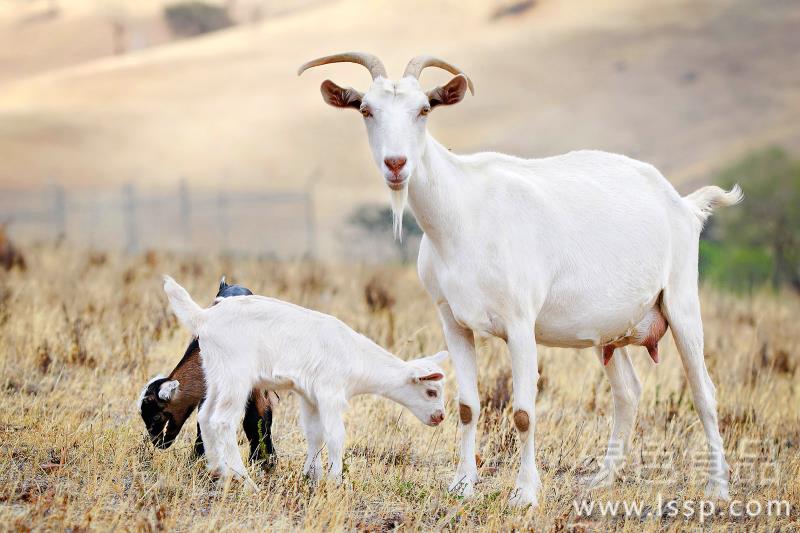
Goat
2. Survival of the fittest.The body size, body weight, age and health status of the ewe flock are inevitable factors affecting milk production. Under normal circumstances, during the 2nd to 5th parity, goat milk production reaches its peak, and after the 6th parity, milk production declines. Therefore, older ewes with low milk production and weak or sick ewes should be culled in a timely manner. Ewes that give birth to twins in each parity should be retained as milk-producing ewes. Ewes with round or pear-shaped udders that swell before milking and shrink after milking should be selected as milk-producing ewes.
3. Strengthen feeding management.First, persist with grazing. Dairy goats should graze for 5~6 hours per day to increase the goats' activity level, promote blood circulation and metabolism, promote gastrointestinal motility and digestion, improve appetite, strengthen physique and increase milk production. At the same time, grazing allows the goats to eat nutritious, highly palatable green grass. Second, provide the goat flock with sufficient nutrition. In the early stage of pregnancy, each ewe should receive high-quality hay and silage each day; in the late stage of pregnancy, in addition to the ewe's own needs, the ewe must also supply the growth of the fetus, so the nutritional level in this period should be 30%~40% higher than in the early stage, digestible protein should be 40%~60% higher, and calcium and phosphorus should be increased 1~2 times. During this period, each ewe should be additionally fed silage, hay and concentrate daily. During lactation, soaked soybeans can be fed. Soybeans are rich in nutrients; the seeds contain 16%~20% fat and 36%~42% protein, and are also rich in iron, calcium, vitamins and so on, which can improve the mammary gland secretion function of ewes. Feeding dairy goats 100 grams of soaked soybeans per day can increase milk production by more than 0.5 kg. The milk fat percentage is also higher than that of ordinary dairy products. Third, use reasonable milking techniques. During milking, keep quiet; first wash the udder with warm water and carefully massage it to make it swell and promote milk let-down. For daily milk production below 2 kg, milking can be done 2 times per day; for more than 3 kg, it is best to milk 3~4 times.
4. Disease prevention and control.In addition to routine diseases, the prevention and control of udder diseases in dairy goats is crucial. The udder is the only organ through which ewes secrete milk, and timely prevention and treatment of mastitis can ensure vigorous lactation. During lactation, wash and wipe the udder with soapy water and warm clean water, and keep the teats and areola clean. If a lamb injures the teats by suckling, stop nursing for 2~3 days, express the milk, then feed it to the lamb, and apply sulfonamide ointment to the affected area. Milk on time every day and massage the udder to eliminate hidden risks of mastitis. Check the udder frequently. If the milk color changes or there are lumps in the udder, apply local hot compresses to promote blood circulation and resolve stasis. Also let the dairy goats drink more water to reduce the viscosity of the milk, making the milk thinner so it is easier to express. At the same time, use the hands to continuously knead and massage the udder gently; while kneading, express the stagnant milk until the stagnant milk is completely expressed and the lump disappears, nipping mastitis in the bud. In addition, regularly feeding dairy goats cool-natured herbs such as dandelion, Viola mandshurica and mint can clear heat and purge fire, cool the blood and detoxify, and prevent and treat mastitis.