What are the advantages of farmyard manure? A comprehensive guide
What are the advantages of farmyard manure? Please give an introduction. Farmyard manure mostly refers to the excrement of humans and animals and other fertilizers. Such as human feces and urine, pig, cattle, sheep, and horse manure and urine, poultry manure and urine, as well as barnyard manure, compost, biogas fertilizer, smoked soil, kang soil, plant ash, etc. Its characteristics mainly include the following aspects: First, farm...
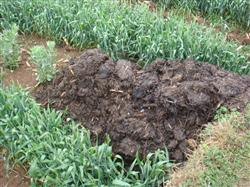 What are the advantages of farmyard manure? Please give an introduction
Farmyard manure mostly refers to the excrement of humans and animals and other fertilizers. Such as human feces and urine, pig, cattle, sheep, and horse manure and urine, poultry manure and urine, as well as barnyard manure, compost, biogas fertilizer, smoked soil, kang soil, plant ash, etc. Its characteristics mainly include the following aspects:
First, farmyard manure has a relatively wide range of sources and low cost. Farmyard manure is basically obtained and composted locally in rural areas, so its sources are wide and its cost is low.
Second, the nutrients contained in farmyard manure are relatively comprehensive, and its fertilizer effect is stable and lasting. In addition to containing the three major nutrient elements of nitrogen, phosphorus, and potassium, farmyard manure also contains calcium, magnesium, sulfur, iron, and various trace elements, as well as some substances that can stimulate root growth and various beneficial soil microorganisms.
Third, farmyard manure can improve soil structure. Farmyard manure is rich in humic acid, which can promote the formation of soil aggregate structure, make the soil loose, improve the moisture and air conditions in the soil, and benefit root growth; it can increase the soil's ability to retain fertilizer and water, raise soil temperature, and also promote the activity and reproduction of beneficial microorganisms in the soil.
Fourth, farmyard manure has a slow fertilizer effect but a long-lasting one. Most of the nutrients in farmyard manure exist in complex organic forms and need to be transformed and decomposed by microorganisms before they can release various available nutrients for crops to absorb and use. This process is relatively slow, but the fertilizer effect is relatively long, and its fertilizer effect can last from 3 years to 5 years. Therefore, farmyard manure is only suitable as a base fertilizer and generally should not be used as a top dressing or seed fertilizer.
Fifth, the nutrient content of farmyard manure is low. The nutrient content of all kinds of farmyard manure is very low, and applying only farmyard manure is far from enough to meet the nutritional needs of crop growth. Therefore, chemical fertilizers must be added so that the two can complement and promote each other, so as to achieve the combination of using land and nourishing land and the goal of high and stable crop yields.
Sixth, farmyard manure can be hot, warm, or cool in nature and has the effect of regulating soil temperature. Generally speaking, horse, sheep, poultry, and rabbit manure are hot-natured fertilizers; human manure, pig manure, compost, and various muddy mixed fertilizers are cool-natured fertilizers. In production, different farmyard manures can be used to regulate soil temperature.
Practice has proved that in agricultural production, farmyard manure is a superior organic fertilizer. The characteristics and effects of farmyard manure cannot be replaced by chemical fertilizers. Even with the large-scale development of chemical fertilizers, the application of farmyard manure is still indispensable. Giving priority to the application of farmyard manure and combining it with chemical fertilizers can not only reduce production investment and increase income, but also reduce groundwater pollution caused by the large-scale application of chemical fertilizers.
Click to get more organic fertilizer application techniques
Click to get more chemical fertilizer application techniques