What organic fertilizers are there? An overview of sources that can be used in daily life
What organic fertilizers can be used in daily life? Please give an introduction. In daily life there are many things that can be used to make farmyard manure (organic fertilizer). The following lists common farmyard manures in daily life for reference: 1. Compost: made with crop straw, weeds, stems and leaves, tree leaves, poultry and livestock manure, etc. as materials, piled layer by layer...
 What organic fertilizers can be used in daily life? Please give an introduction
In daily life there are many things that can be used to make farmyard manure (organic fertilizer). The following lists common farmyard manures in daily life for reference:
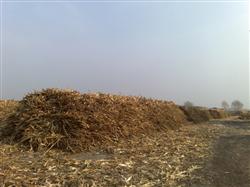
I. Compost: made with crop straw, weeds, stems and leaves, tree leaves, poultry and livestock manure, etc. as materials, piled layer by layer, and decomposed and rotted through the action of microorganisms. During the reproduction of microorganisms, suitable temperature, moisture, aeration, pH and so on must be maintained to facilitate the reproduction and activity of microorganisms.
II. Pen manure and stable manure: includes the manure of pigs, cattle, sheep, chickens, ducks and various other livestock and poultry, and is rich in nutrients such as nitrogen, phosphorus and potassium. After fermentation and rotting, it is applied as a base fertilizer.
III. Human excrement and urine: rotted human excrement and urine is a quick-acting nitrogen fertilizer, containing much nitrogen and little phosphorus, potassium and organic matter, and can be applied together with quick-acting phosphorus and potassium fertilizers. The ammonia in human excrement and urine is prone to volatilization loss, so it should generally be stored sealed. If 2-3% superphosphate is added, it can not only fix nitrogen but also supplement the phosphorus fertilizer in human excrement and urine. Human excrement and urine can be applied in furrows or holes, and immediately after application water should be given and soil covered to prevent volatilization. Note that unrotted human excrement and urine easily burns roots, so do not apply it directly.
IV. Mud fertilizer: the silt of ditches, ponds, marshes, rivers, pools and urban sewers all belongs to mud fertilizer. It contains relatively much organic matter and is a slow-acting fertilizer, and can be used as a base fertilizer for orchards.
V. Green manure: intercropping green manure plants between orchard rows allows fertilizer to be made on site and used on site. There is no need for piling or composting, and no need for transport to the field, which can save labor. Green manure crops between orchard rows are preferably leguminous crops that are short-stemmed, have many tillers, well-developed root systems and luxuriant stems and leaves, so as to avoid shading the fruit trees.
VI. Urban garbage: composed of melon and fruit peels and shells, chicken and fish trimmings, vegetable leaves, tree leaves, eggshells, stove ash and so on. It mainly comes from households, vegetable markets and garbage from road cleaning, and is a composite organic fertilizer. It contains the three elements nitrogen, phosphorus and potassium and is similar to compost and stable manure; after application it can improve the physical structure of clay and loosen the soil.
Click to get more organic fertilizer application techniques
Click to get more chemical fertilizer application techniques