How effective is it to use chemical fertilizers together with organic fertilizers?
How effective is it to combine chemical fertilizers with organic fertilizers? Please give guidance. The effect of applying chemical fertilizers together with organic fertilizers is quite good. For details, you can refer to the following list: 1. Benefits of using chemical fertilizers together with organic fertilizers. 1. It can improve fertilizer efficiency. Fertilizers such as superphosphate and trace elements, after being applied to the soil, are fixed by the soil and lose...
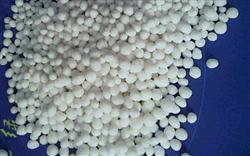 How effective is it to combine chemical fertilizers with organic fertilizers? Please give guidance.
The effect of applying chemical fertilizers together with organic fertilizers is quite good. For details, you can refer to the following list:
1. Benefits of using chemical fertilizers together with organic fertilizers
1. It can improve fertilizer efficiency
Fertilizers such as superphosphate and trace elements, after being applied to the soil, are fixed by the soil and become ineffective. When mixed with organic fertilizer, because the contact surface with the soil is reduced, nutrient fixation is reduced. Organic fertilizer can also increase the solubility of phosphate rock, and this is even better under paddy field conditions.
After many chemical fertilizers are mixed with organic fertilizers, the chemical fertilizers can be absorbed and retained by the organic fertilizer, reducing losses. In addition, mixing chemical fertilizers with organic fertilizers can also promote the decomposition of organic fertilizers and improve fertilizer efficiency.
Experiments show that using chemical fertilizers together with organic fertilizers can not only lower the soil redox potential and reduce the nitrification of ammonia, but also reduce the volatilization loss of nitrogen. Generally, it can increase the nitrogen fertilizer utilization rate by 10%-15%.
2. It can reduce certain adverse side effects that chemical fertilizers may produce
When a relatively large amount of chemical fertilizer is applied alone or when chemical fertilizers are applied unevenly, the soil solution concentration is high, which affects the crop's water uptake and can even damage the roots. If mixed with organic fertilizer, this problem will not occur.
In addition, if physiologically acidic fertilizers are applied alone for a long time, the soil will become acidic, producing excessive harmful substances such as active iron and active aluminum, causing toxicity to crops. When mixed with organic fertilizer, it can increase the soil's buffering capacity and prevent soil acidification.
For another example, some superphosphate contains too much free acid. When used as seed fertilizer, it will affect seed germination and seedling growth. After adding organic fertilizer, the free acid is neutralized, which can reduce harm to the seeds.
3. It can increase crop nutrition
Organic fertilizer contains relatively complete nutrients, has a stable and long-lasting fertilizer effect, and contains a lot of organic matter. It can increase the soil organic matter content and improve the soil's physical and chemical properties. It can not only supply crops, but also supply soil microorganisms with nutrients such as nitrogen, phosphorus, and potassium, as well as vitamins and growth hormones. After organic fertilizer is applied, soil enzyme activity is enhanced, which is conducive to nutrient transformation.
For example, mixing organic fertilizer with superphosphate or magnesium superphosphate can promote the growth of free-living nitrogen-fixing bacteria in the soil and increase the nitrogen nutrition of crops. According to experiments, compared with plots where only chemical fertilizers were applied, plots where chemical fertilizers and organic fertilizers were used together for 3 years had an organic matter content 0.08%-0.11% higher, a 260% increase in ammonifying bacteria, a 119% increase in aerobic nitrogen-fixing bacteria, and a 600% increase in cellulose-decomposing bacteria.
4、When returning straw to the field and applying undecomposed organic fertilizer, adding chemical nitrogen fertilizer can avoid affecting crop growth due to early nitrogen deficiency, while the supply speed should be slow, and cereal crops need both nitrate nitrogen and ammonium nitrogen at the maturity stage, and organic fertilizer can achieve this.
II. Requirements for using chemical fertilizers together with organic fertilizers
1. Grasp the application time well. Organic fertilizer is large in quantity and slow to take effect, so it should be applied as early as possible. Generally, it should be applied once as base fertilizer before sowing; while chemical fertilizer is used in smaller amounts and takes effect quickly, so it should generally be applied about 7 days before the crop needs fertilizer.
2. Master the application method well. Organic fertilizer should be applied into the soil plough layer in combination with deep ploughing and harrowing. Nitrogen chemical fertilizer used together with organic fertilizer should be suitable as base fertilizer or topdressing, while phosphate fertilizer can be applied together with organic fertilizer as base fertilizer.
3. Control the application amount well. When chemical fertilizers are used together with organic fertilizers, the amount can vary according to different crops and soil fertility.
For example, for rice, on low-fertility soil, 1000-1500 kg of organic fertilizer, 10-15 kg of urea, 40-45 kg of compound fertilizer, and 10-12 kg of potassium chloride can be applied per mu; on medium-fertility soil, 500-1000 kg of organic fertilizer, 8-10 kg of urea, 35-40 kg of compound fertilizer, and 8-10 kg of potassium chloride can be applied per mu; on high-fertility soil, 500 kg of organic fertilizer, 6-8 kg of urea, 35-40 kg of compound fertilizer, and 6-8 kg of potassium chloride can be applied per mu.
Click to get more organic fertilizer application techniques
Click to get more chemical fertilizer application techniques