Timely marketing of meat rabbits brings high returns; how can the fattening period be shortened?
1. Choose and raise meat rabbits that grow fast in the early stage. The main meat rabbit breeds are: Belgian Rabbit, French Lop Rabbit, German Giant Rabbit, New Zealand White Rabbit, Japanese White Rabbit, American California Rabbit, and Danish White Rabbit. These meat rabbits have large body weight and can be marketed before 90 days of age, so they can be selected for raising.
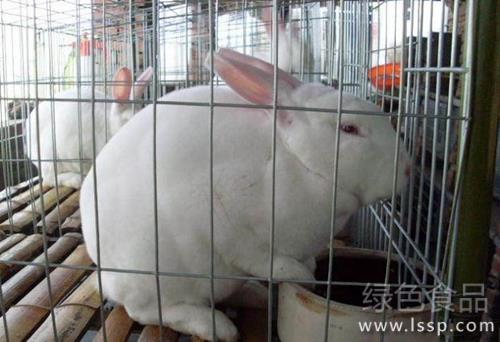
Meat rabbit
2. Crossbreed to produce excellent young rabbits. Young rabbits are the foundation of the economic benefits of meat rabbit farming. To produce excellent young rabbits, it is necessary to select good sires and dams. The sire breeding rabbits should have good meat quality, fast early weight gain, high feed conversion rate, and high slaughter rate; the dam breeding rabbits should have many offspring, good motherhood, high milk yield, strong nursing ability, high survival rate of young rabbits, and uniform development. Using such rabbits for crossbreeding basically produces excellent young rabbits.
3. Maintain suitable temperature and humidity in the rabbit house. The temperature and humidity in the rabbit house affect the weight gain of fattening rabbits. Under intensive rearing, the optimal temperature for fattening young rabbits is 24°C; from 42~46 days of age, when the young rabbits' digestive enzyme system is fully formed, the suitable temperature is 24~30°C; from 60~80 days of age, 18~24°C is better. As for humidity in the rabbit house, because meat rabbits like dryness and fear dampness, but also do not like excessive dryness, the suitable humidity in the rabbit house is 60%~65%, with 60% being optimal, not lower than 40% at the lowest, and not higher than 75% at the highest. Otherwise, it is unfavorable for meat rabbit fattening.
4. Ventilate the rabbit house. If harmful gases accumulate in the rabbit house, they will affect the growth and development of meat rabbits and also make them sick. The ventilation conditions in the rabbit house should be good, keeping the air clean and fresh.
5. Reduce lighting. Fattening meat rabbits are fed a complete-price feed. Apart from adding water, adding feed, cleaning, and observing health, the rabbit house is kept dark. This not only saves electricity but also helps fattening rabbits gain weight.
6. Market and slaughter at the proper time. For fattening rabbits, in terms of days of age, it is generally better to market and slaughter at 60~90 days of age; in terms of body weight, it is suitable to market and slaughter at a live weight of 2.25~3 kg. If the days of age or weight are too small, it will affect returns; if too large, it will increase feeding costs, and both are very uneconomical.