Temporary Holding of River Crabs to Avoid the Peak Marketing Period: How to Prevent Death?
To avoid the situation of low prices during the peak marketing period, many farmers are in no hurry to sell their river crabs during the harvest season. Instead, they hold them temporarily until around the Spring Festival before selling, in order to gain greater profits. However, many river crabs become seriously ill during the temporary holding period, die in large numbers, and cause significant economic losses. Through analyzing the causes of death in temporarily held river crabs, crab farmers have put forward corresponding countermeasures for everyone's reference.
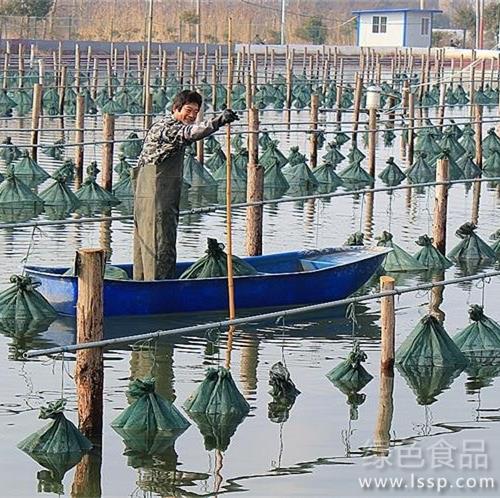
Temporary holding of river crabs
I. Causes of death:
1. High temporary holding density: Some farmers hold as many as about 500 kg of river crabs per mu. Some river crabs need to complete their final reproductive molt in the holding pond, but due to limited environmental conditions in the holding pond, insufficient feed, and high stocking density, some river crabs die from unsuccessful molting, and some are killed by attacks from other river crabs during molting.
2. Temporary holding in net cages: Some crab farmers use net cages to hold river crabs temporarily. Because the mesh of the net cage serves both as a climbing and attachment surface for the crabs and as a place where their appendages break, many crabs die from broken walking legs that leave them unable to protect themselves when density is high.
3. Management cannot keep up: To save costs, no hidden artificial nests can be provided for the river crabs in the holding pond, nor are there aquatic plants available for them to rest on and feed from. After completing their final molt, the crabs' ability to protect themselves is reduced.
4. Poor dredging of the holding pond: Many crab farmers use adult crab ponds or summer fry ponds to hold river crabs temporarily. These are generally not dredged, and the silt is rich in pathogenic bacteria. Temporarily held river crabs have poor disease resistance and are prone to illness and death.
5. Damage to the gill filaments of river crabs and excessive water loss: Many people purchase river crabs and then hold them temporarily, but the crabs have been out of water for a long time, the gill cavities and gill filaments are severely damaged, and excessive water loss leads to death.
II. Preventive measures
1. Build the holding pond well: The holding pond should have sufficient water sources, unpolluted water quality, rich dissolved oxygen, and little silt deposition, ideally 5-10 cm. The pond should be rich in aquatic plants, with an area of 2-3 mu and a water depth of 0.8-1 m. Do not use net cages to hold river crabs temporarily unless they will be sold within a few days, but water peanut should be planted around the net cages.
2. Clear the pond and disinfect it: Half a month before the temporarily held river crabs are put into the pond, use 75 kg of quicklime per mu to clear and disinfect the pond with water (water depth 10-15 cm).
3. Suitable density: The temporary holding density should be 150-200 kg per mu. Before the river crabs are put into the pond, they should be checked one by one, and injured, disabled, dying, and dead crabs should be removed. It is best to grade them into large, medium, and small sizes and hold them in separate ponds.
4. Handle gently and prevent disease early: When catching river crabs, handle them gently and never injure their walking legs. During the temporary holding period, if river crabs show rotting abdominal appendages, red and swollen anus, or refusal to eat, feed them feed supplemented with oxytetracycline and Xiekangning No. II.
5. The time should be short: The temporary holding period for river crabs should preferably be 1.5 to 2 months. When the water body is small, water quality is poor, water exchange is slow, and the temporary holding density of river crabs is high, the holding time should be shortened.
6. Strengthen management: Keep the water quality fresh, increase oxygen and change water in a timely manner, feed palatable feed, and supplement vitamins to ensure the health of the river crabs.