How to prevent and treat sheep lungworm disease? Be on alert for coughing, difficulty breathing and poor appetite
The pathogen of sheep lungworm disease is the lungworm, which is divided into two types: the large type (large filiform nematodes of the family Dictyocaulidae) and the small type (nematodes of the family Protostrongylidae). The adult large lungworms parasitize the trachea and bronchi of sheep; eggs containing larvae or already-hatched larvae are coughed up with sputum, or after being swallowed are passed out in the feces. The larvae can live freely in water and manure, and in 6-7 days develop into infective larvae, which enter the blood through the sheep's digestive tract and then, via the bloodstream and circulation, reach the sheep's lungs.
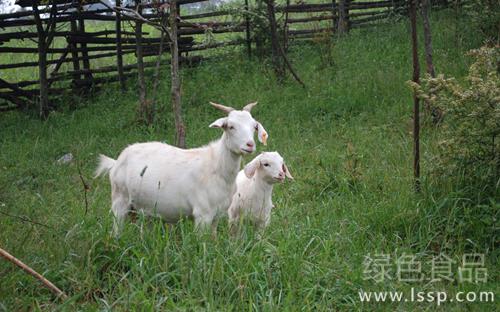
Sheep
1. Clinical symptoms: The first sign is coughing, initially in a few individual sheep, then in more and more of them. The coughing is more obvious when the sheep are driven, resting at night, or let out of the pen in the morning; auscultation of the lungs reveals moist rales. During coughing attacks, clumps of mucus are coughed up, and the nostrils of affected sheep often discharge mucous secretions, which after drying form scabs around the nostrils; the sheep frequently sneeze and have difficulty breathing. Some affected sheep run a high fever of 40°C-41°C, the visible mucous membranes are pale, and the abdominal skin turns yellow; they eat less and show pica, gradually become emaciated and anemic, with rough, lusterless wool; in a few affected sheep, edema occurs under the jaw, under the chest and on the limbs, and they die within a few days.
2. Prevention and treatment
(1) Do not graze sheep in low-lying, damp places, and do not let them drink stagnant water. Treat the feces to kill the larvae. Also carry out regular deworming.
(2) Treat the large lungworm by tracheal injection of iodine solution. Use 1 g of iodine flakes, 1.5 g of potassium iodide and 1500 mL of distilled water; after boiling to sterilize, cool to 20-30°C, then perform the tracheal injection. Dosage: 8 mL for lambs, 10 mL for young sheep, 13 mL for adult sheep, as a single injection.
(3) Treat the small lungworm by tracheal injection of sodium salicylate solution. Use 5 g of sodium salicylate plus 100 mL of distilled water; after sterilization, inject into the trachea. 20 mL for adult sheep, 10-15 mL for young sheep, as a single injection.
(4) Treat with tetramisole. Give 7-25 mg per kg of body weight orally, or prepare as an aqueous solution for intramuscular injection.
(5) Treat with thiabendazole. Give 10-15 mg per kg of body weight, as a single oral dose or prepared as an injection for intramuscular injection.