During continuous rainy spells, guard against duck soft-leg disease: weakness in both legs and swollen joints are warning signs
Poultry soft-leg disease, also known as soft paralysis wind. It can occur in ducklings, growing ducks and adult ducks, and the higher the egg production of the female duck, the higher the incidence. It is especially likely during continuous rainy spells, when the ground is damp; after heavy rainfall, moisture rises, and ducks are more prone to soft-leg disease. If laying ducks contract soft-leg disease, in mild cases they drop eggs, and in severe cases they die.
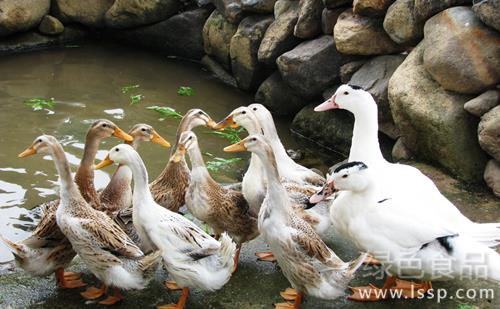
Duck flock
Causes of the disease:
Damp sites and poorly ventilated duck houses. Especially in housed rearing, insufficient sunlight, lack of exercise, excessive flock density, incomplete daily ration nutrition, lack of minerals especially calcium and phosphorus, and lack of vitamin D all easily trigger soft-leg disease in laying ducks.
Symptoms:
Affected ducks have weak, powerless legs; once they fall over, they struggle to stand, and they often use both wings to support themselves on the ground to walk slowly, and some have swollen joints and gradually become emaciated. After ducks contract soft-leg disease, they are prone to secondary infections such as colds and bronchitis, which greatly increases mortality.
Prevention and control measures:
1. Clean the duck house promptly: (1) Clean the duck house frequently to keep it clean and prevent the spread of pathogens; allow proper grazing and more sun exposure, let the ducks exercise more, and keep them from huddling together as much as possible, avoiding excessive density and crowding. (2) Keep the duck house dry and ventilated, and change the litter frequently to prevent dampness in the duck house.
2. Adjust the feed promptly: (1) In special weather, soft-leg disease in ducks can sometimes also be caused by feed, so switch promptly to compound feed; do not always feed self-mixed nutritionally incomplete feed or a single grain such as paddy. (2) Increase feeding of vitamin D, calcium and phosphorus substances, green feed, wheat bran and fresh corn; rice bran should make up 8-10% of the daily ration, and calcium 1.5%. (3) Add calcium-containing mineral additives to the duck feed, and where conditions permit, add cod liver oil.
3. Carry out prompt early prevention and treatment: treatment of duck soft-leg disease must start early. In the early stage of the disease, treat promptly, otherwise the treatment effect is poor and mortality is high. In the early stage of illness, promptly inject drugs such as vitamin D colloidal calcium intramuscularly; for each duck each time the dose is 500 units of vitamin D and 0.5 ml of colloidal calcium; for adult ducks inject 1—2 ml per duck each time, once a day, for 2-3 consecutive injections, and at the same time orally administer sugar calcium tablets containing 0.5 g of calcium phosphate and 15 mg of vitamin B (about 2-3 tablets); adult ducks once daily for 3-5 consecutive doses. If cod liver oil can be given orally while pricking the duck's toe blood vessel to let blood, the treatment effect is even better.
4. Treat secondary diseases promptly: ducks with soft-leg disease often have accompanying secondary diseases in the middle and late stages, so while treating duck soft-leg disease, secondary conditions such as duck colds and bronchitis should also be treated.
Precautions :
Some duck farmers, when their ducks contract soft-leg disease, often increase calcium feeding, thinking it is caused by calcium deficiency. In fact, to prevent and treat duck soft-leg disease, one should definitely not add too much calcium to the feed; as required, it should not exceed 3%, otherwise it easily causes poisoning and greater losses.