Control methods for excessive autumn breeding of freshwater shrimp and competition with parent shrimp for food and space
Freshwater shrimp mature early, have strong reproductive capacity, and lay eggs in autumn. When carrying eggs in autumn, most of the nutrients taken in by the parent shrimp are used for embryonic development, and the growth rate slows down; moreover, large numbers of autumn-bred fry compete with the parent shrimp for food and space, restricting each other. At year-end harvest, the proportion of offspring-generation freshwater shrimp is large, and the size is difficult to improve and is uneven. Therefore, controlling excessive autumn breeding of freshwater shrimp can increase the commercial rate of freshwater shrimp and increase benefits.
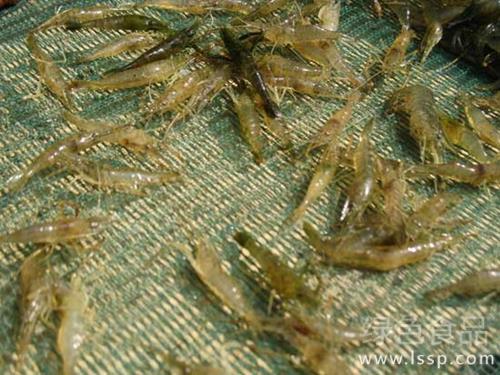
Freshwater shrimp
Buy high-quality fry:When buying fry, go to a freshwater shrimp original and improved seed farm. Avoid many years of self-breeding and self-raising, because repeated inbreeding will cause harmful genes in freshwater shrimp to become continuously homozygous, making freshwater shrimp quality worse and size smaller.
Neutron-irradiated freshwater shrimp fry:Use low-dose neutron radiation to irradiate 0.8—1cm shrimp fry. By activating polymerase activity in the bodies of freshwater shrimp fry, the development of the gonads of freshwater shrimp is slowed.
Control pond water temperature:In summer and autumn, the water level of the shrimp pond can be appropriately deepened to more than 1m, and the area of aquatic plants in the pond should be increased. The principle of this method is to delay the time of gonadal development of freshwater shrimp by controlling the effective accumulated temperature within a certain period.
Control water exchange frequency:Exchange water once every 7-10 days, with each water exchange amounting to about 1/4 of the total. Exchanging water too frequently will accelerate the speed of gonadal development of freshwater shrimp due to frequent water flow stimulation.
Delay the time of releasing fry:Freshwater shrimp fry stocked in May-June can produce large numbers of first-generation offspring freshwater shrimp around September. If the stocking time of freshwater shrimp is chosen for when autumn breeding is about to occur, that is, releasing fry in early July, autumn breeding can be controlled by suddenly changing the living environment of freshwater shrimp.
Splash limewater:Use 20-25 kg of quicklime per mu, slake it into slurry, and splash it over the whole pond. Limewater can quickly increase the pH value of the pond water, causing shrimp larvae and as-yet-unmetamorphosed nauplius larvae to die due to excessively high pH.
Control pond water quality:In the September autumn breeding season, appropriately make the pond water quality "lean", with transparency above 40cm. This will cause freshwater shrimp fry to have a reduced survival rate because they cannot obtain sufficient plankton feed.
Polyculture with silver carp and bighead carp fingerlings:In the freshwater shrimp pond, polyculture about 10 kg each of 20-30 silver carp and bighead carp fingerlings. Silver carp and bighead carp will filter-feed most of the plankton in the pond, and the nauplius larvae of freshwater shrimp before metamorphosis are also a "delicacy" for bighead carp fingerlings. This method can also control the number of freshwater shrimp fry.